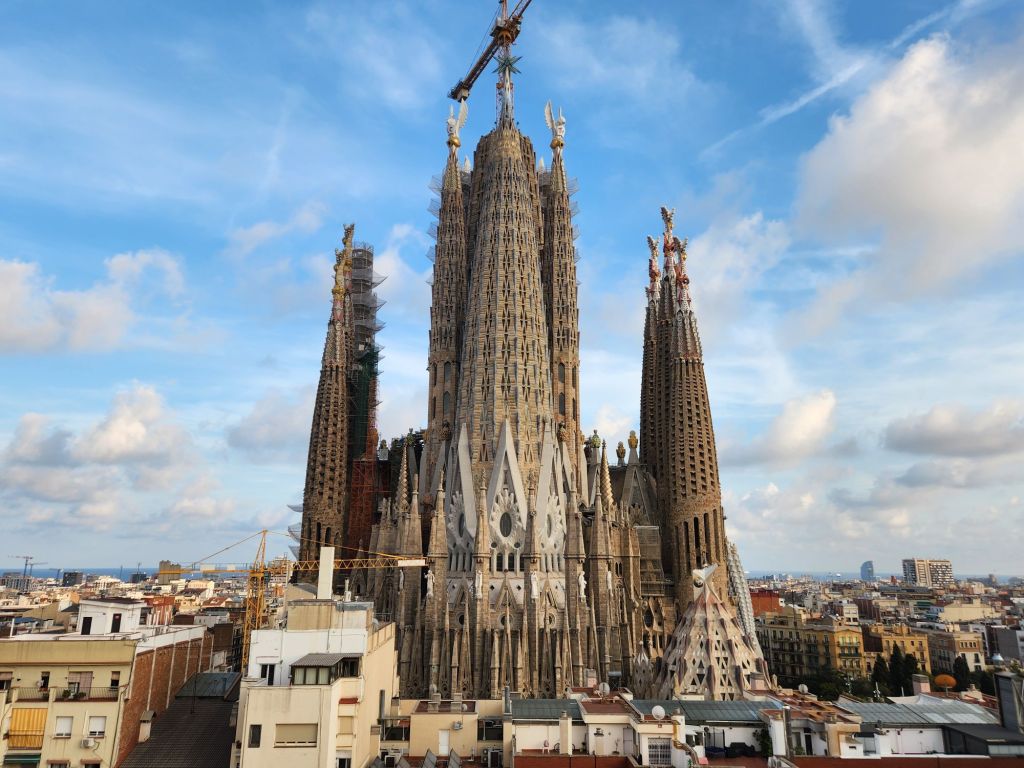
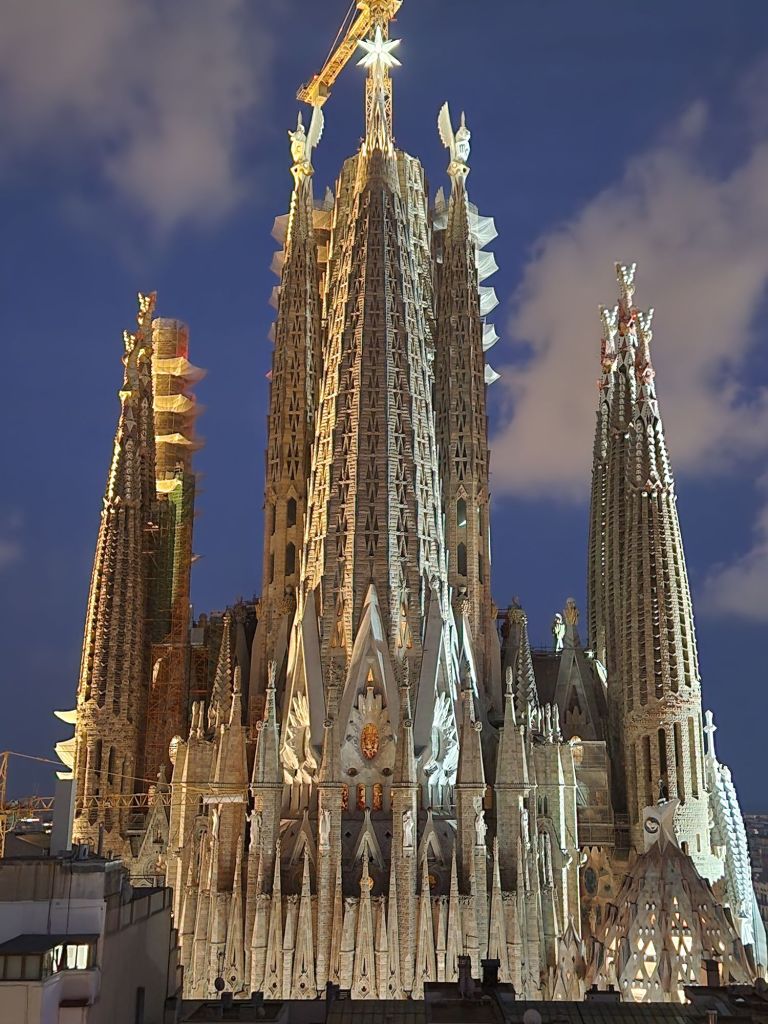
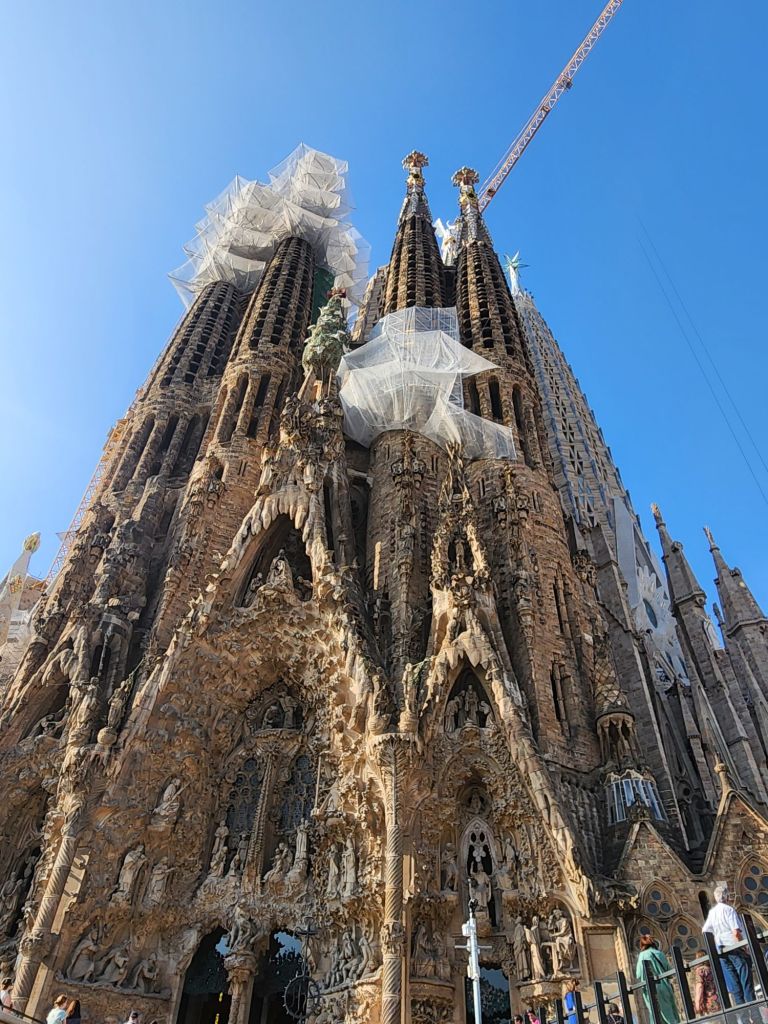
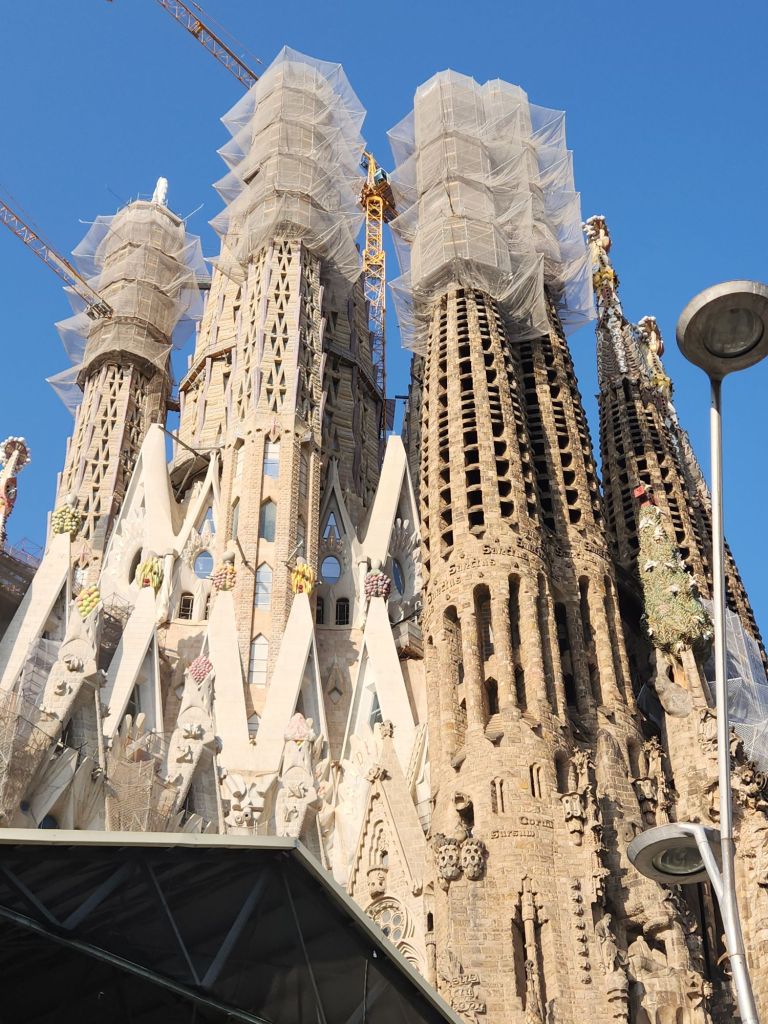
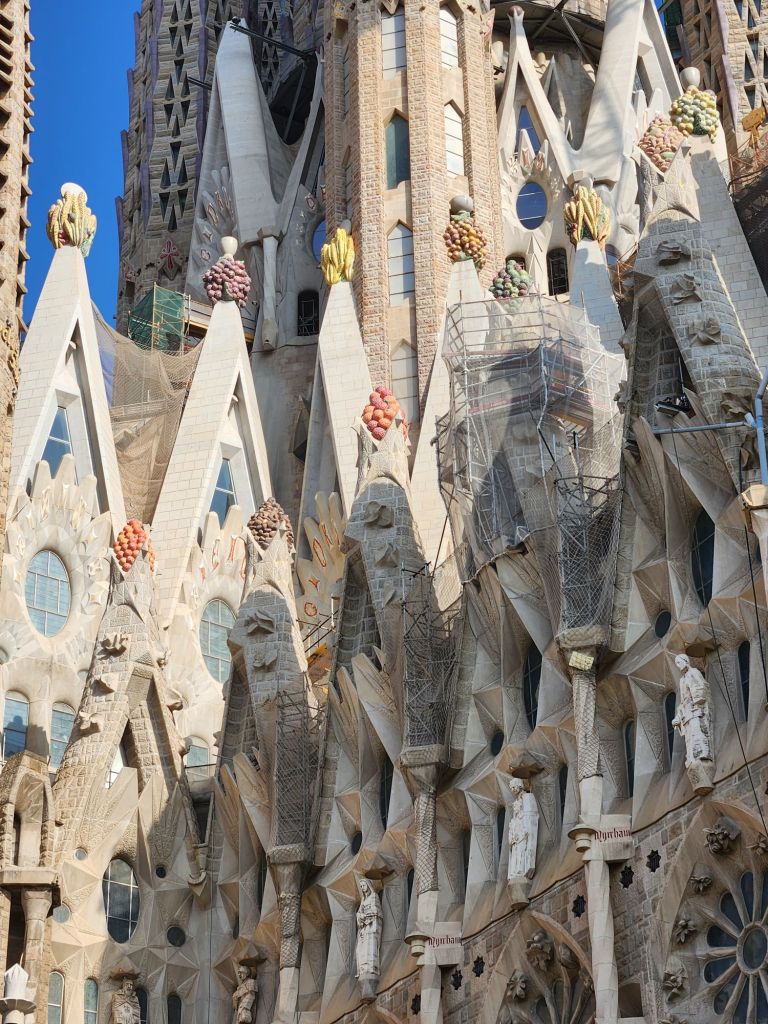
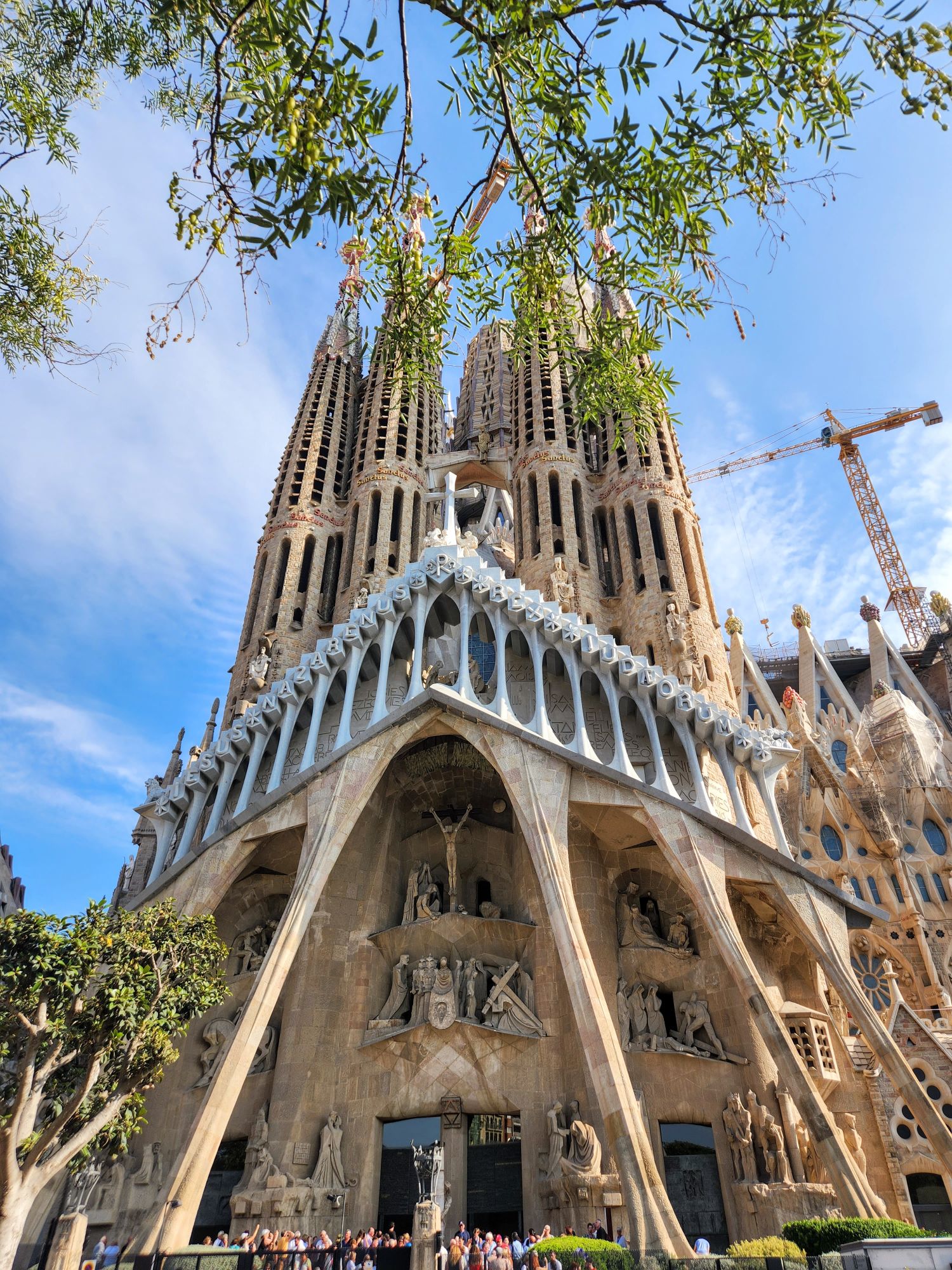
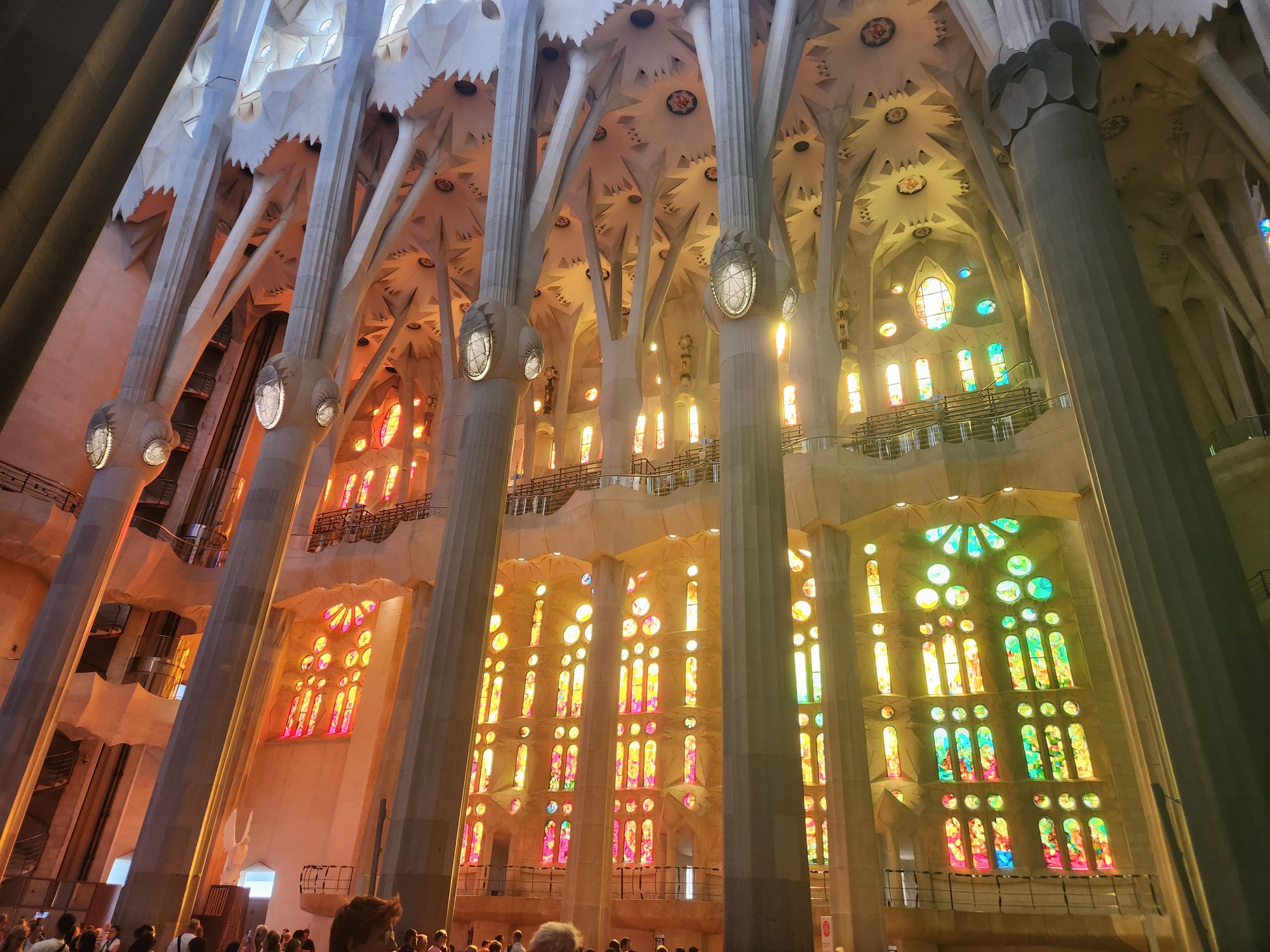
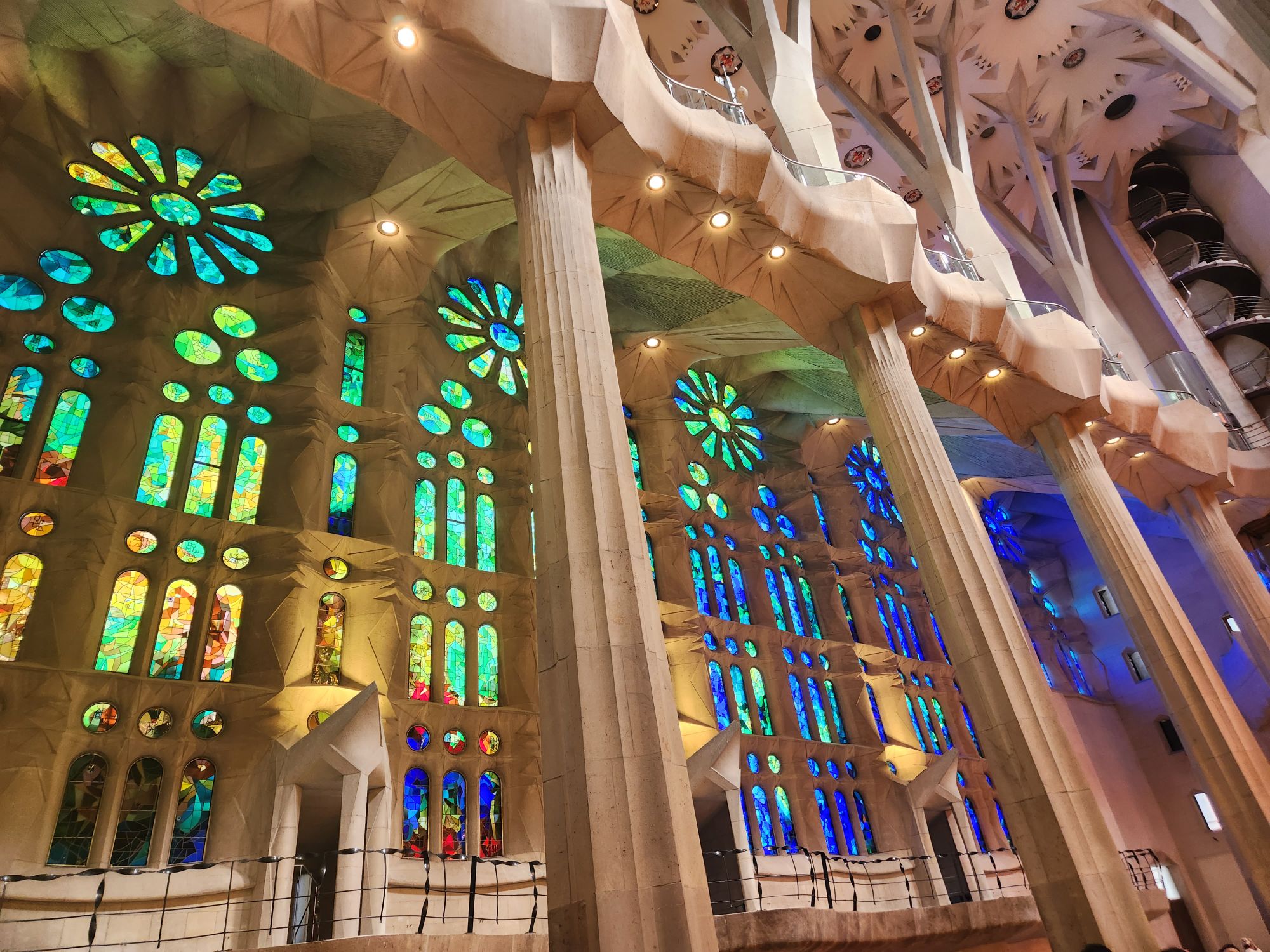
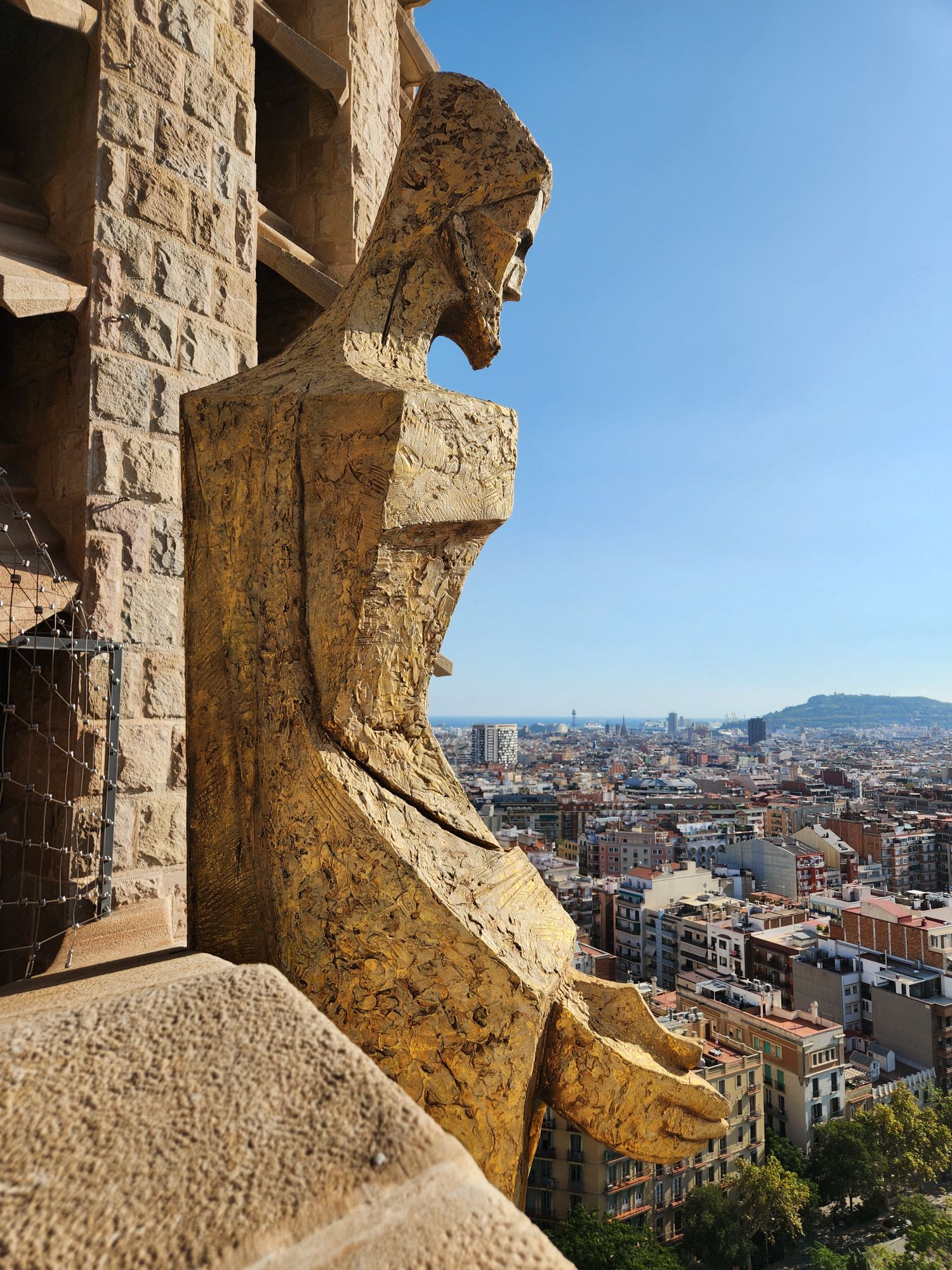
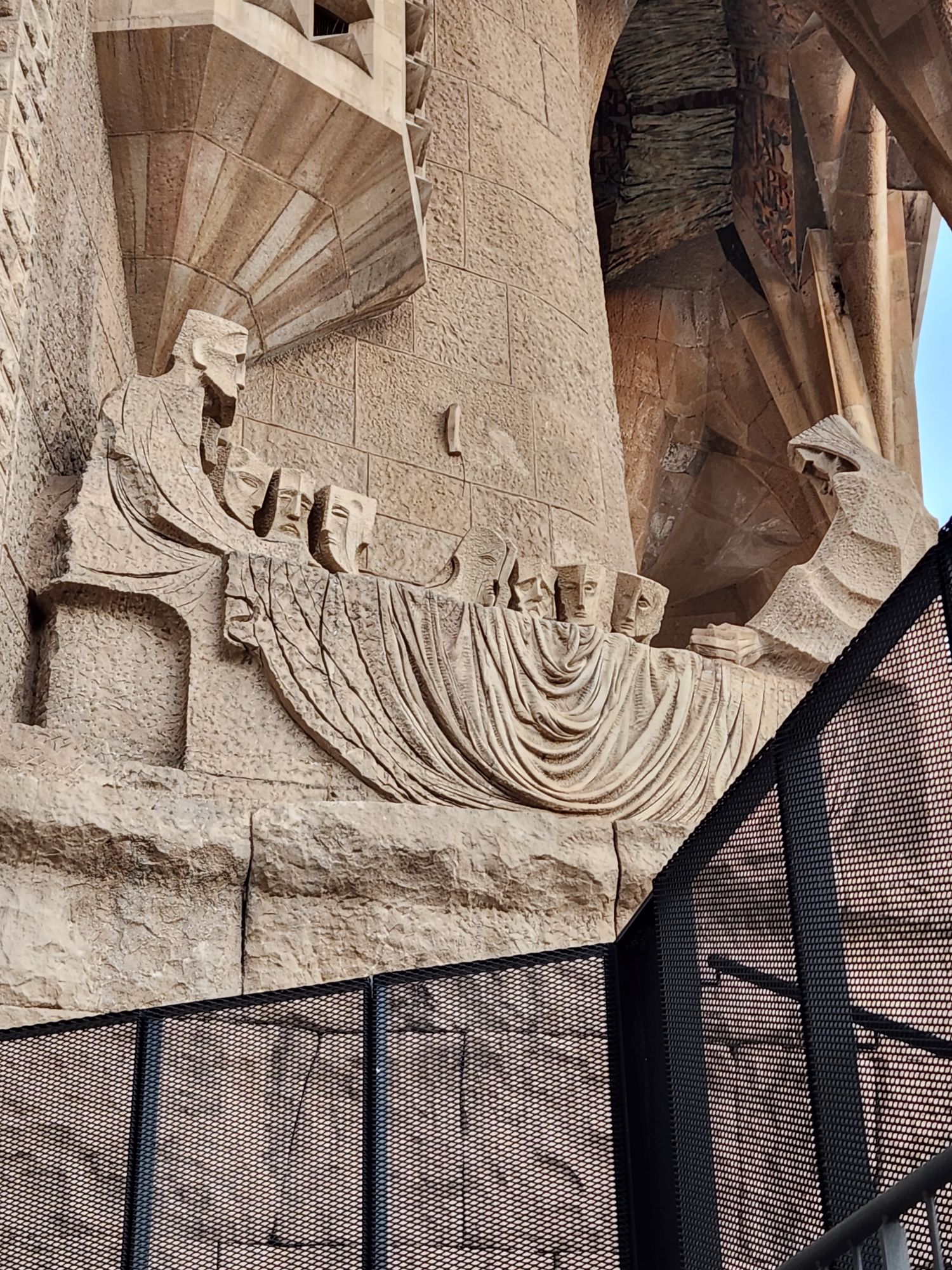
As soon as we stepped off the train in Barcelona I felt the energy and youthfulness of the city. Despite my lack of a “lisp” for s’s I felt right at home in Spain. I chose for us to stay in a hotel in Barcelona for 4 nights because of the pictures of its views of the Sagrada Familia. The first time we got off the elevator and stepped into the rooftop restaurant/bar we felt the full effect of the view…such a big WOW!!!! Our initial response to the basilica was that it looked amazing and huge but rather messy and disjointed. On our guided tour we learned the history of the construction that began in 1882 under Antoni Gaudí. Gaudí died in 1926 and parts of his models and plans were destroyed in a fire in 1936 but the work continues and should be finished in approximately 2026. It is interesting to see how the original section in a Gothic revival style is now weathered and stained and the newer sections are Art Nouveau and modern. There are few straight lines and no right angles. The alter is amazingly simple and plain but the stained glass windows are gloriously colorful: blue and green on the east side and orange and red on the west side. The interior columns are created in the form of tree trunks…I could wax on and on about the beauty and surprising aspects of the Sagrada Familia. Just don’t miss this experience it if you go to Spain.
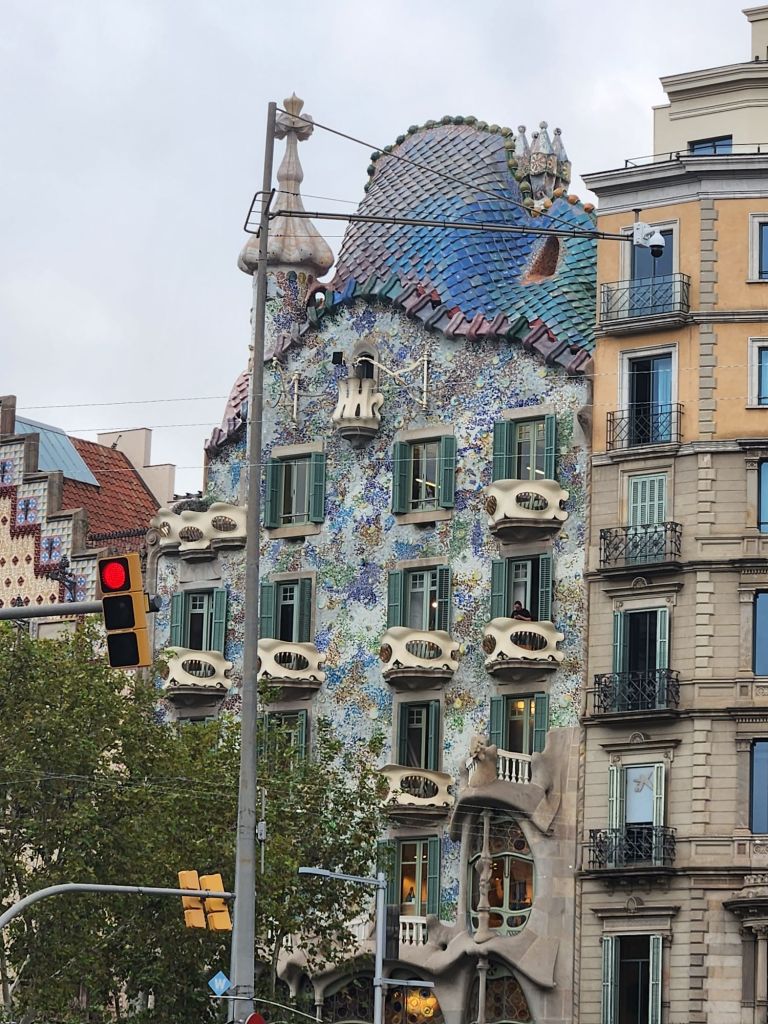
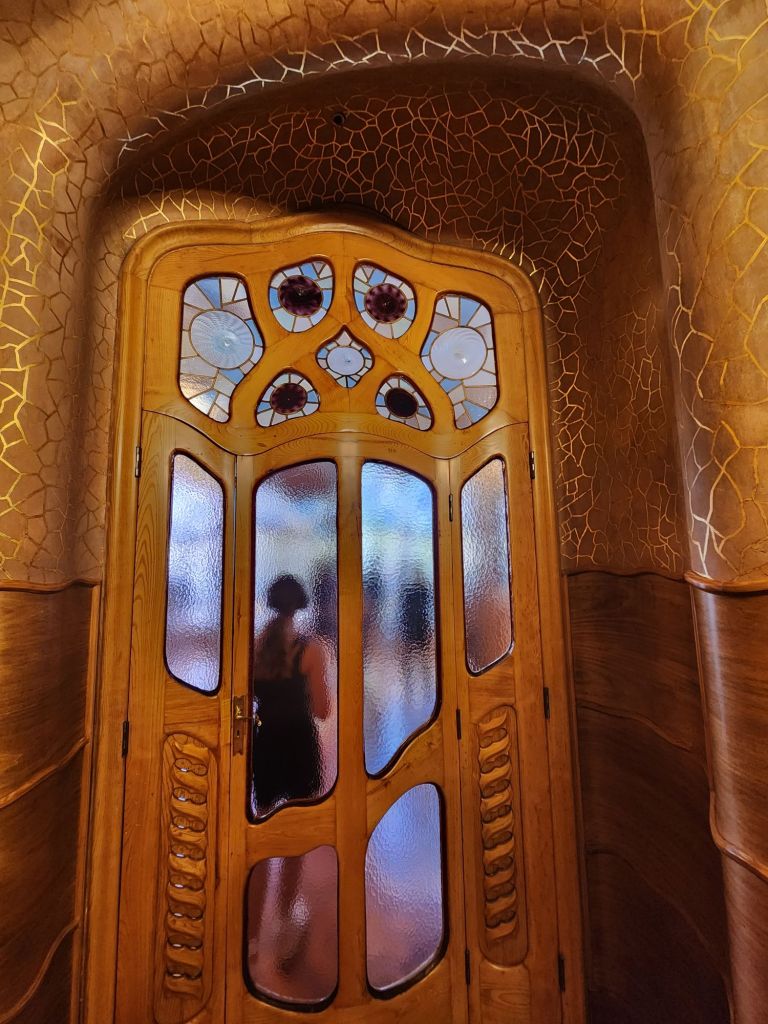
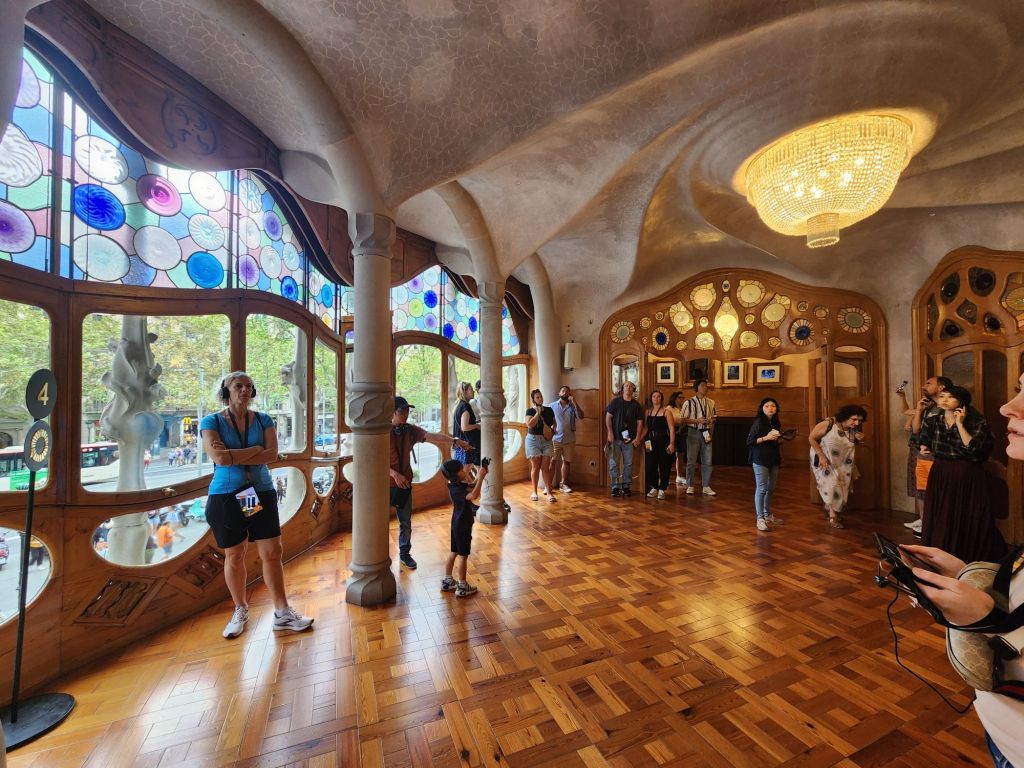
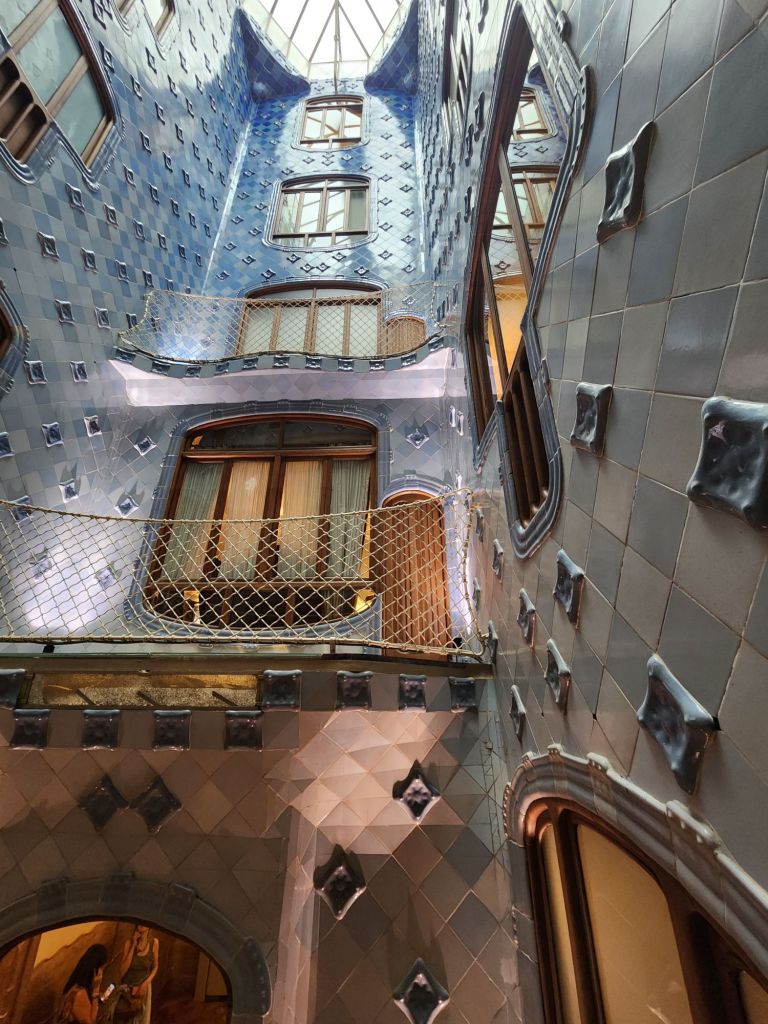
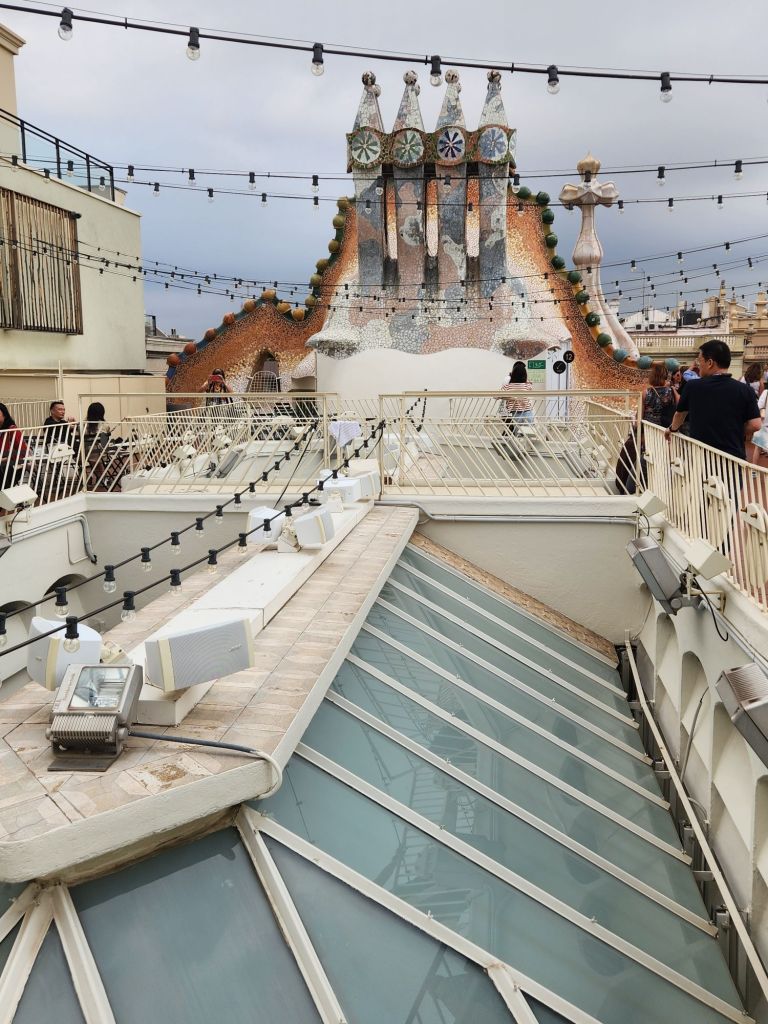
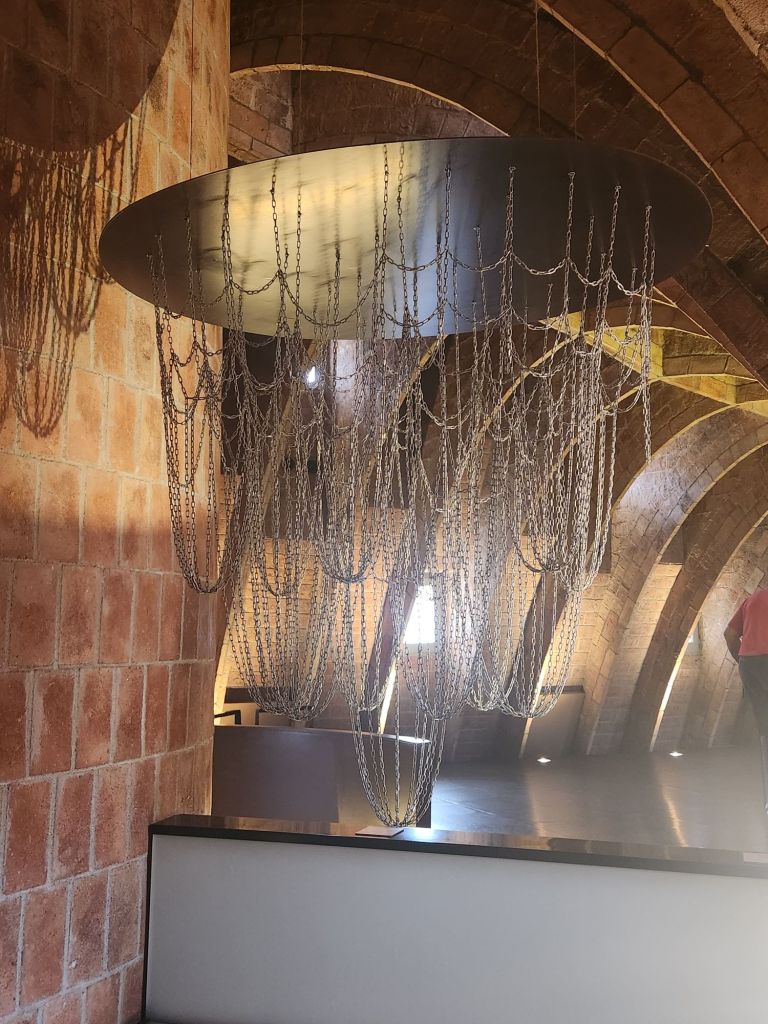
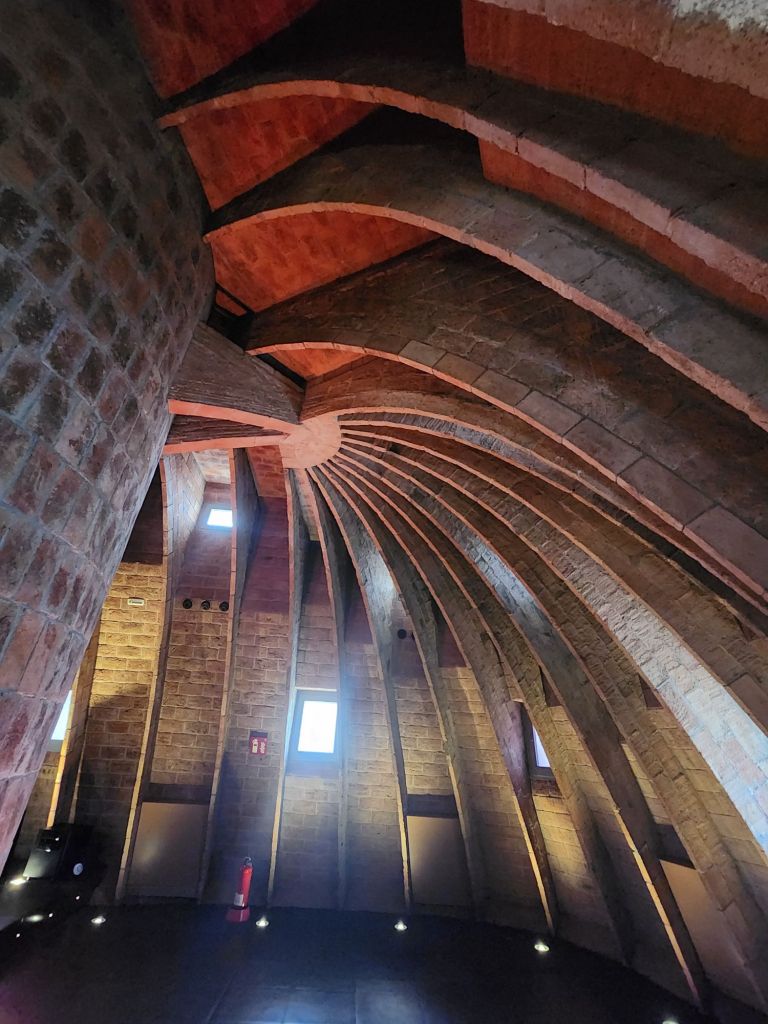
Gaudí was our theme for Barcelona…we also toured Casa Batlló and La Pedrera, two buildings known for their interior light sources as there was no electricity when they were built. In Casa Battló the interior light well, reflection from tiles, stained glass and fun shaped windows bring a sense of brightness and luminosity. Again, there are few straight lines and many unusual shapes such as the roof that is arched like a dragon or dinosaur. In the loft, formerly a service area for laundry rooms and storage, there are catenary arches that represent the ribcage of an animal. Gaudi loved using a particular geometry in his building designs. We saw it in the Sagrada Familia and in two of his houses. Whether hyperbolic or parabolic (a plane intersecting a cone parallel to the axis of a cone vs parallel to the side), he achieved them by hanging chains from two points then distorting them. The effect of this translated into a structure can be seen in these pictures. A model made of chains was on display and is how he made decisions as to what catenary shapes to use for beauty and strength. The ceiling arches in the Segrada interior is a brilliant display of these shapes. Yes, I would love to borrow some of his ideas for any future home I might have off the boat.
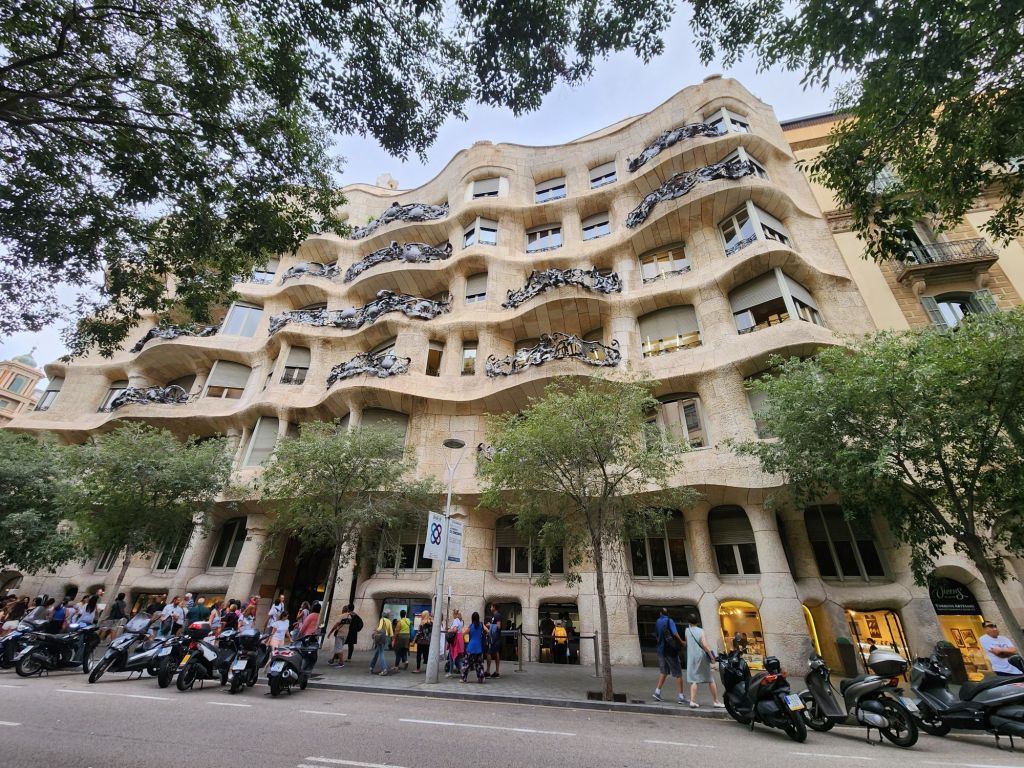
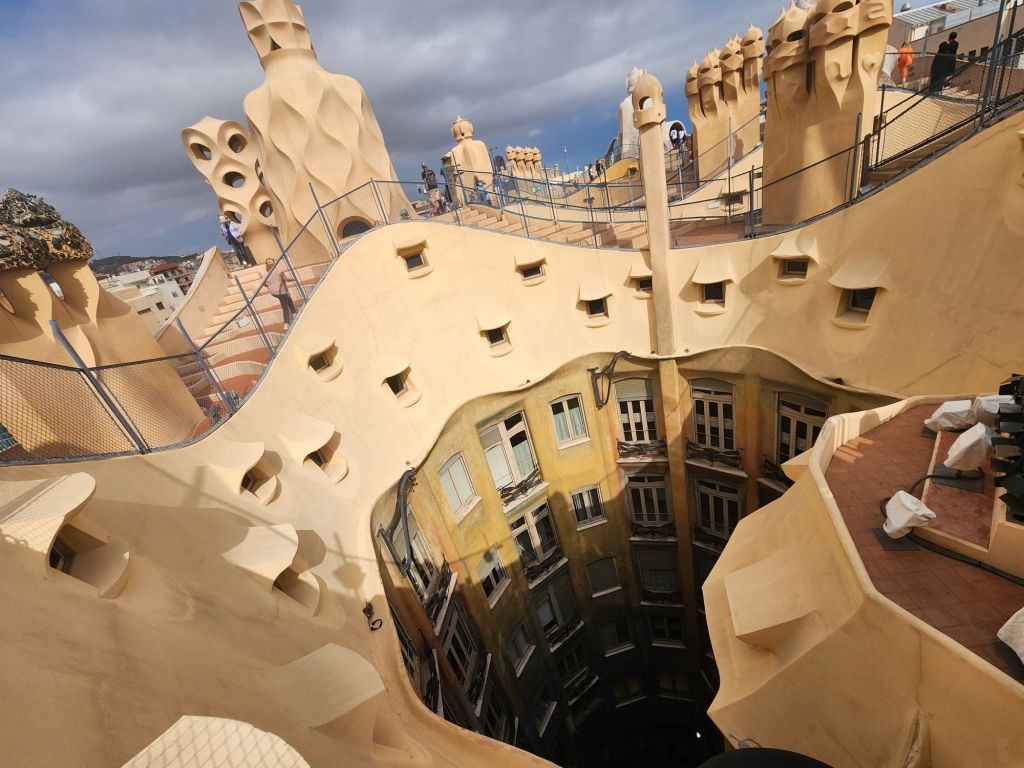
In La Pedrera there isn’t a single load-bearing wall, they are all columns and open spaces. He created curves where there are typically angles, created surprises in unusual places like on top of roofs and designed underground carriage parking. We left Barcelona as big Gaudi fans. Expect the unexpected in a Gaudí design.
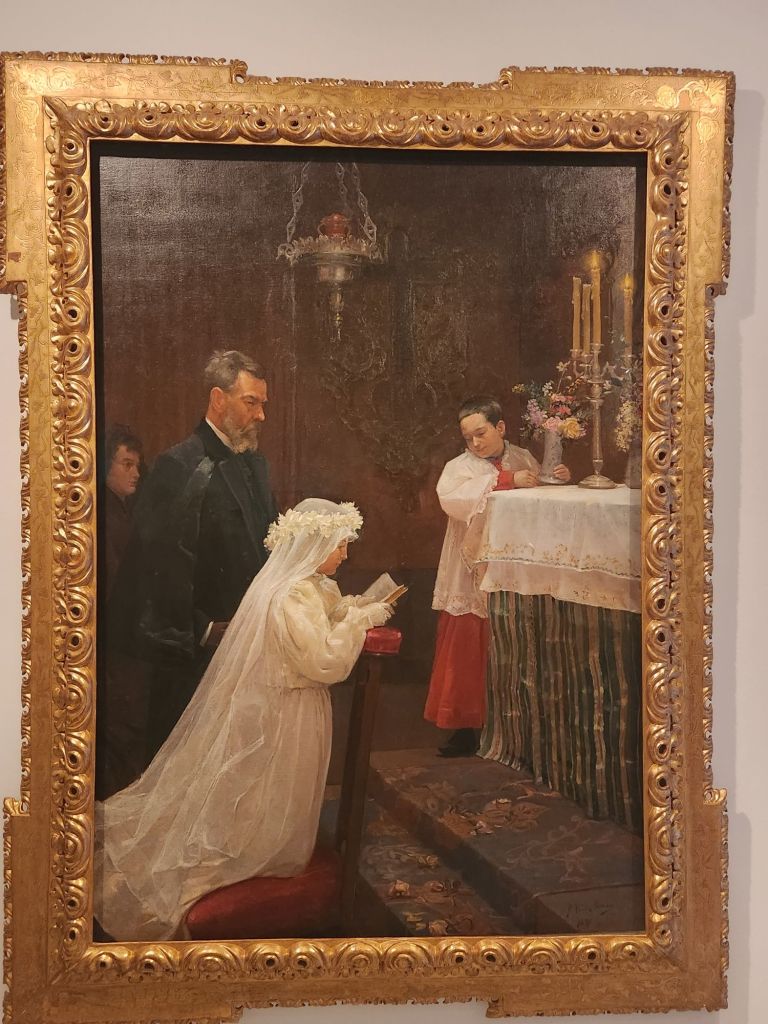
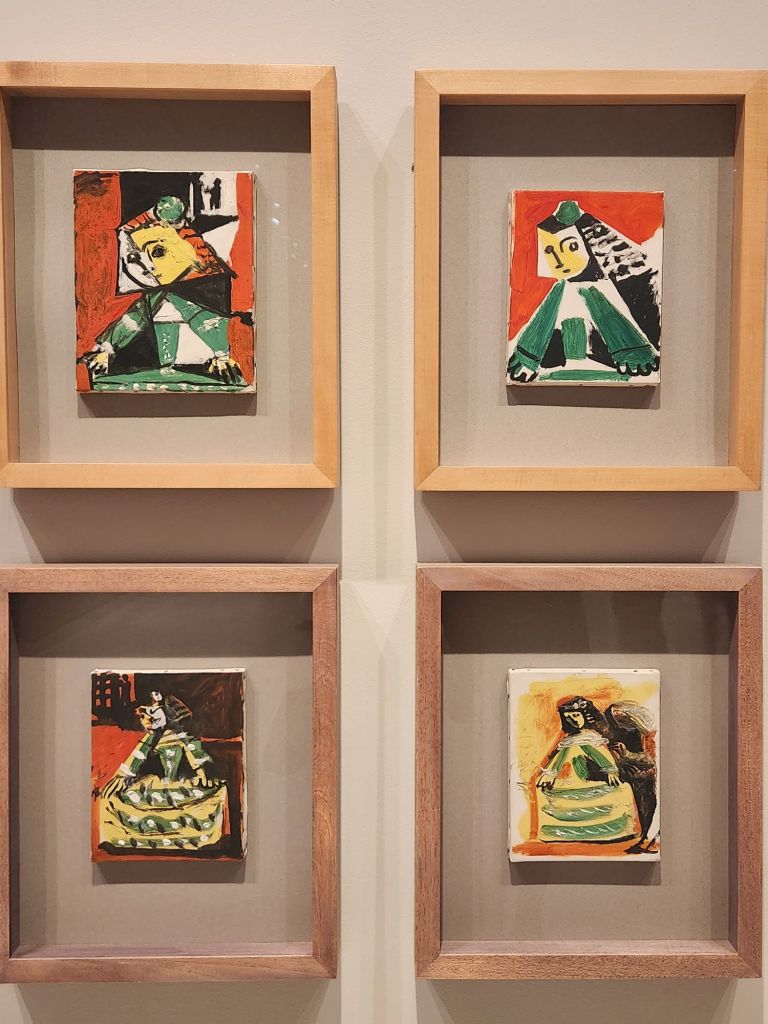
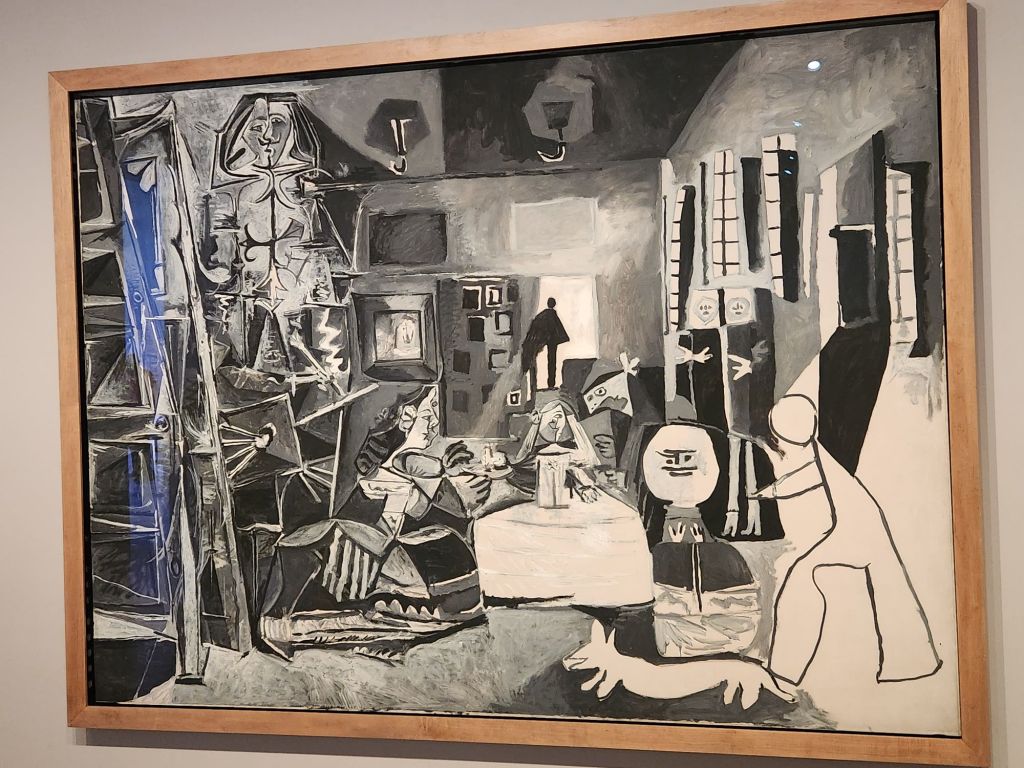
Our last activity in Barcelona was visiting the Picasso Museum. It was fascinating to see how talented he was at such a young age. The above left picture was painted when he was 15 years old demonstrating that he was quite the accomplished and trained artist. I was also intrigued by his collection of paintings relating to Las Meninas by Velasquez. In a four and a half month period in 1957 he created 58 variations of the famous painting that we later saw in the Reina Sofia.
Madrid was our second stop and The Prado museum and The Museo Reina Sofia were big thrills for me! For Scott not so much but he was such a trooper! No photography was allowed in the Prado but our guide taught us a great deal and I will have eternal memories of the Garden of Earthy Delights and Saturn Devouring His Son along along with Goya’s other dark works which were painted after he lost his hearing.
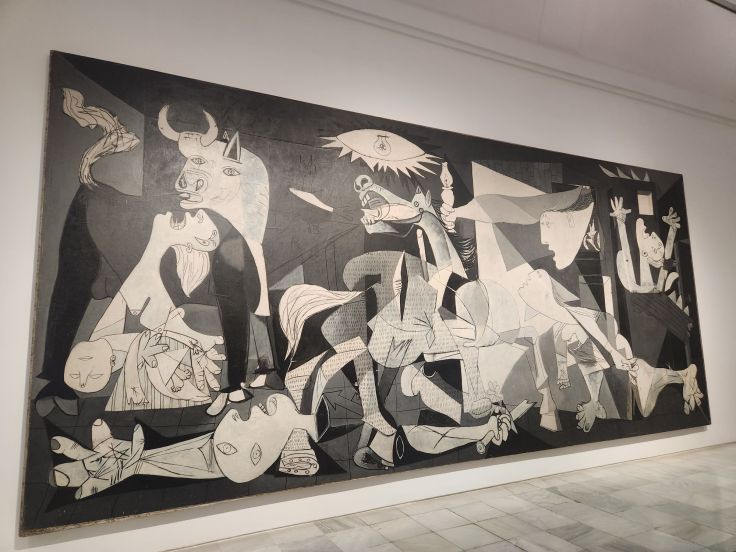
Guernica reins supreme at the Reina Sofia. This powerful painting represents the chaos and horror of war and conveyed an intense feeling to this viewer. This enormous painting (11.5 x 25.5 feet) was completed in about three weeks. Other famous works by Dalí, Miró and others are are in this twentieth-century and contemporary art museum. As I mentioned previously, seeing art in person is completely different from seeing it in a text book or from a slide show.
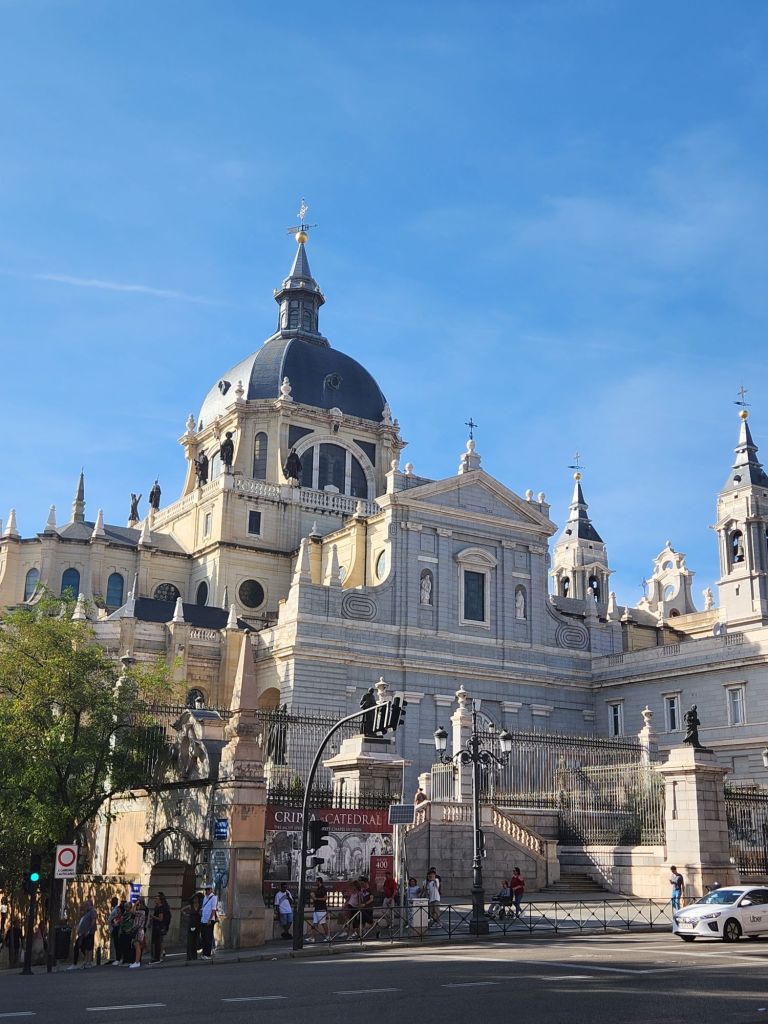
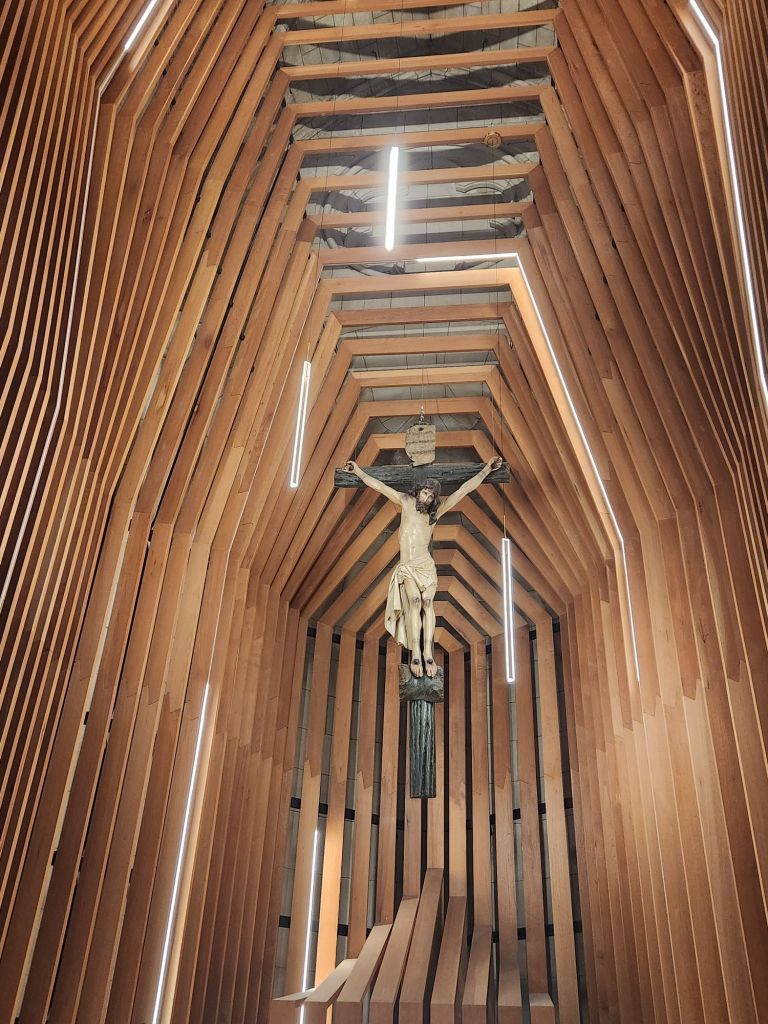
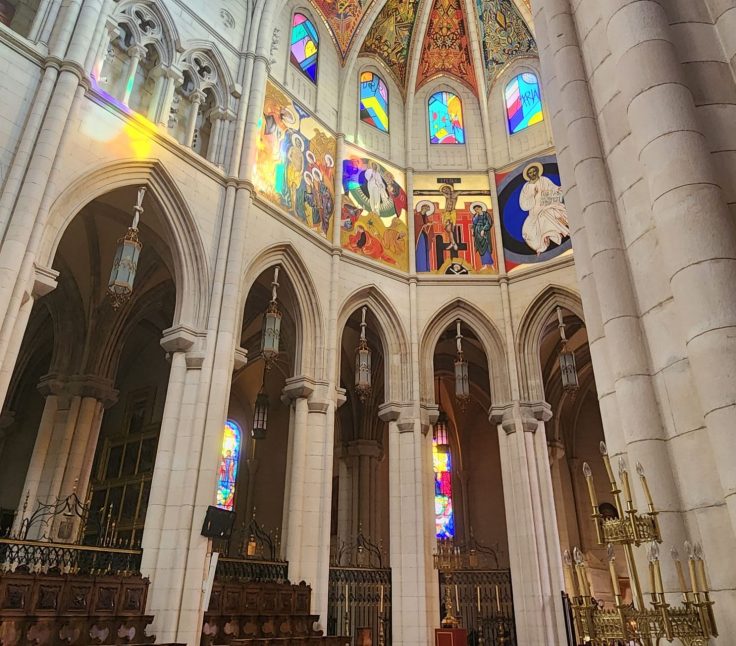
We enjoyed a walking tour through medieval Madrid and feasted on sights such as El Palacio Real and the Catedral de la Almudena. The Royal Palace is the official residence of the Spanish royal family although is now only used for ceremonies. It is the largest royal palace in Europe. The Almudena Catedral took a century to complete and houses vivid colors and beautiful stained-glass windows. The layout is unusual, in fact, we got a little lost inside!
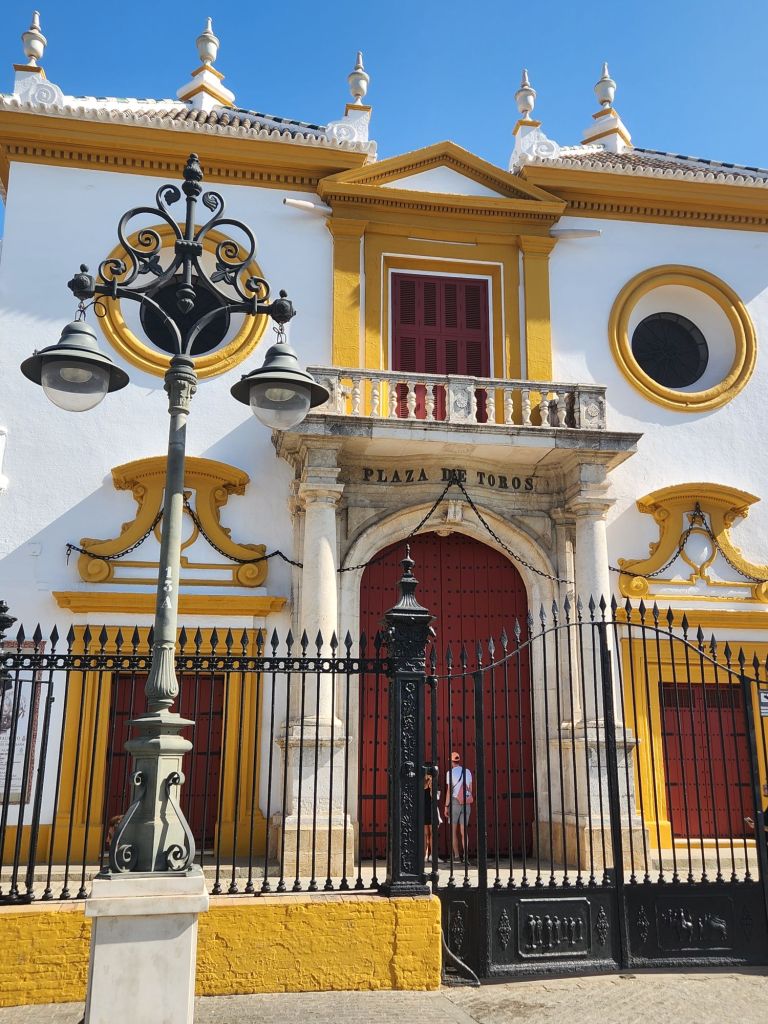
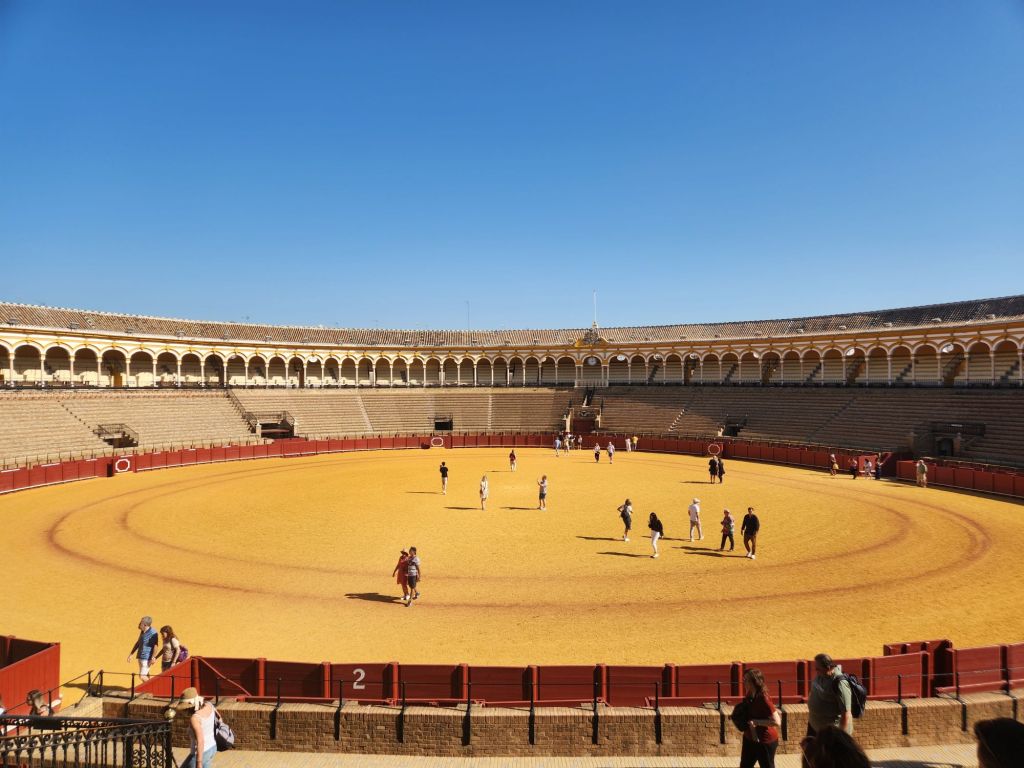
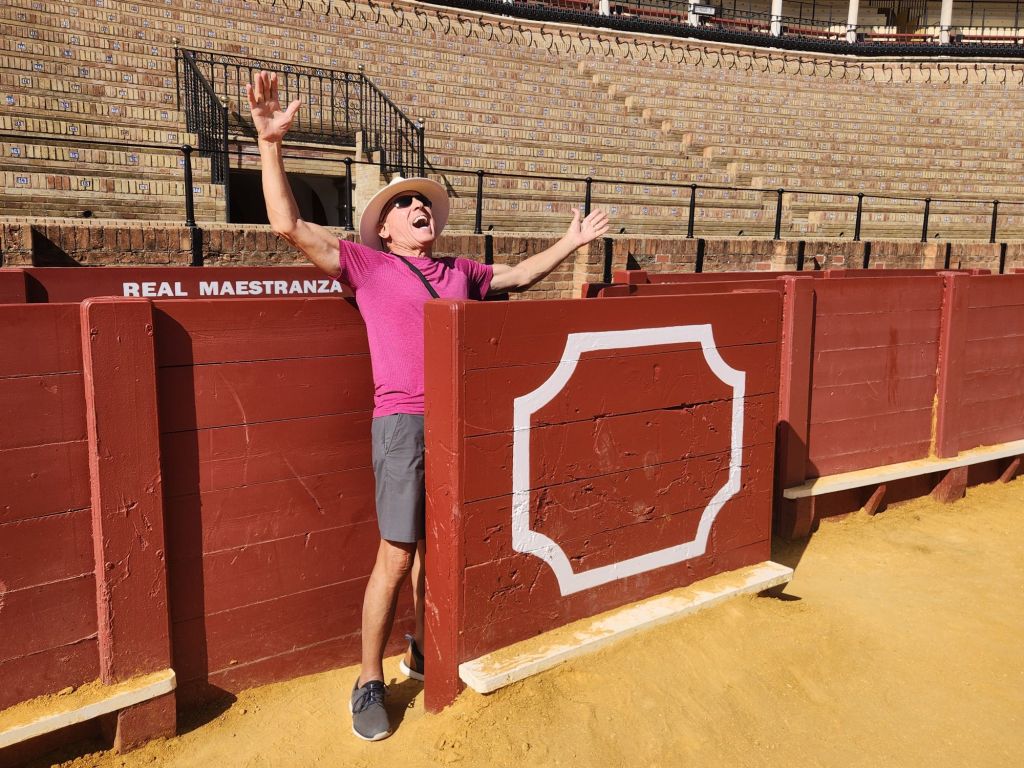
The decision to see a bullfight had been discussed ad nauseam for months. Pros: it is a key factor in hispanic culture, I had studied them in Spanish classes so it seemed educational. Cons: We might get sick or cry, we really don’t want to see animals be killed, especially for sport. The tickets were finally ordered for a big bullfight in Sevilla, Andalucia, the heart of bullfighting and we had three nights scheduled there. Then they changed the date of the fight for when we would no longer be in Sevilla. There was a tiny bit disappointment but a lot relief. We did tour the museum at Plaza de Toros de la Real Maestranza which is located in the perimeter of the ring where we saw the chapel, infirmary, and learned way more than we really wanted to know. Many facts were omitted such as how the bulls are tortured before they even enter the ring, how they often die a slow and painful death, there’s a lot of blood in the dirt and it smells, and often horses and matadors die.
Flamenco was the second traditional art form that we wanted to experience. In the Museo del Baile Flamenco we learned that Flamenco is so much more than just a dance. It is the marriage of song, music (guitars and percussive sounds) and dance that was influenced by Gitanos (gypsies) and Moorish culture. The movements, facial expressions and lyrics evoke fiery passion and drama. The rhythmic sounds of the feet and clapping can be highly complex and technical. The performance that we attended was enthralling and the guitarist was highly skilled.
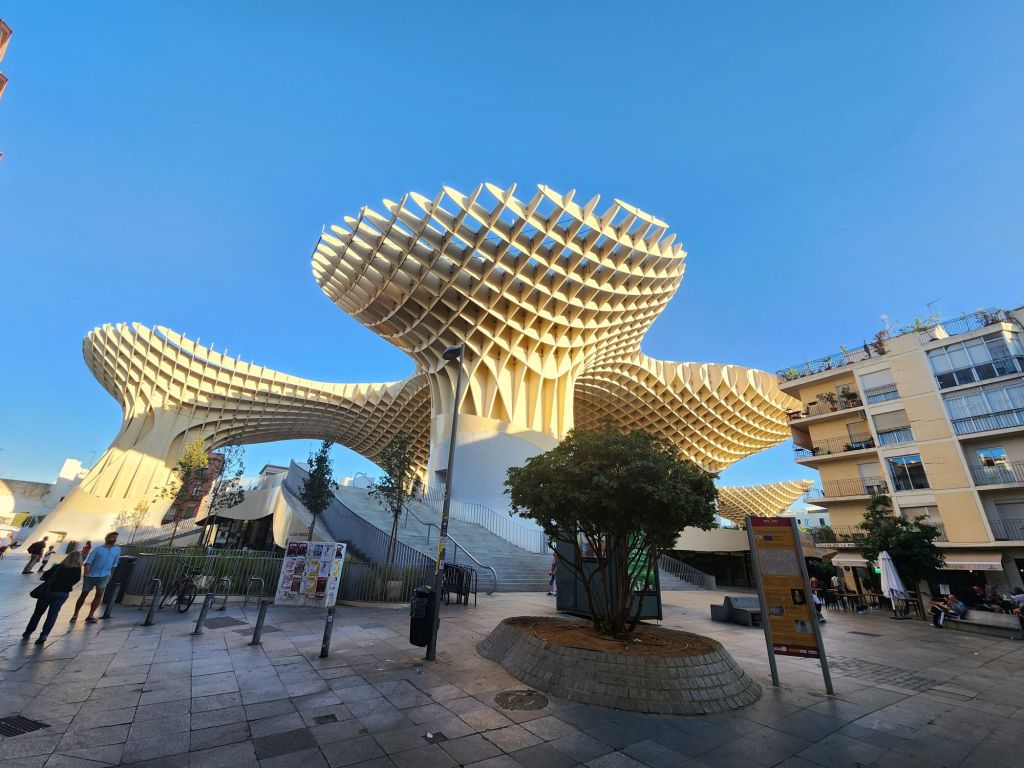
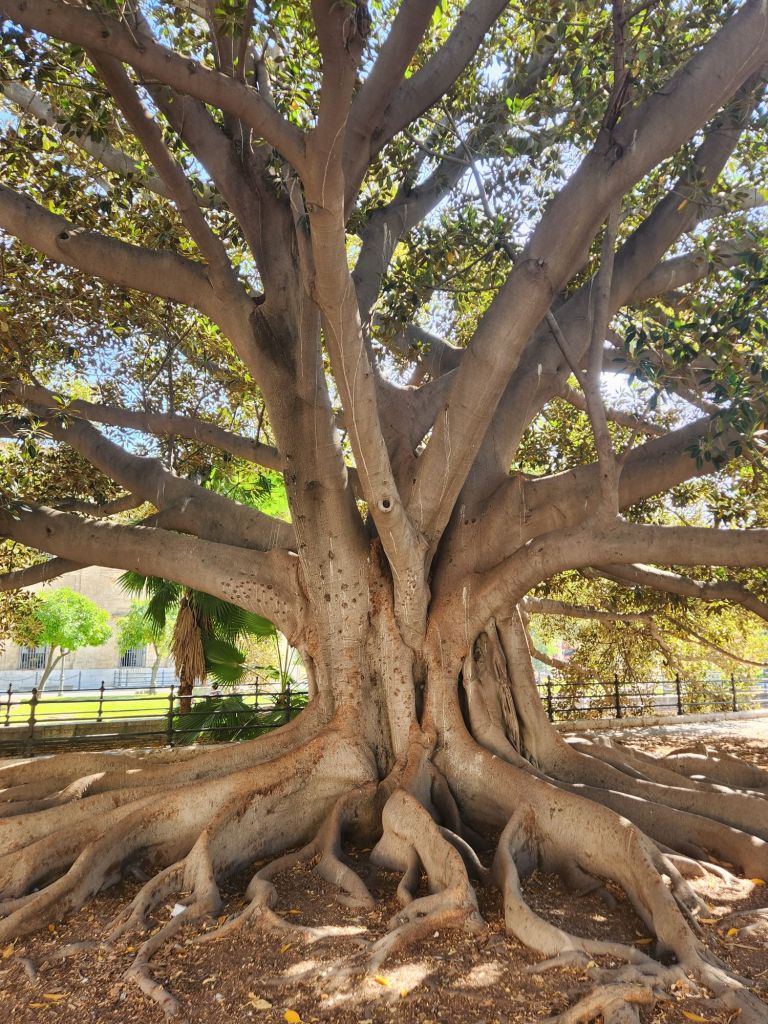
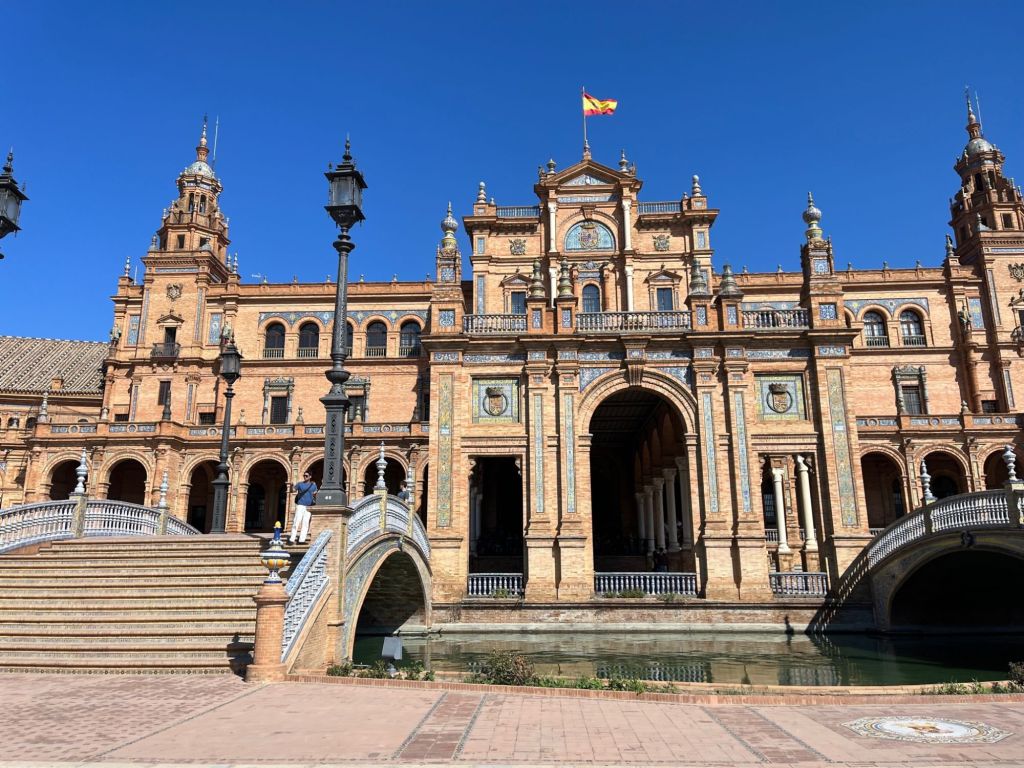
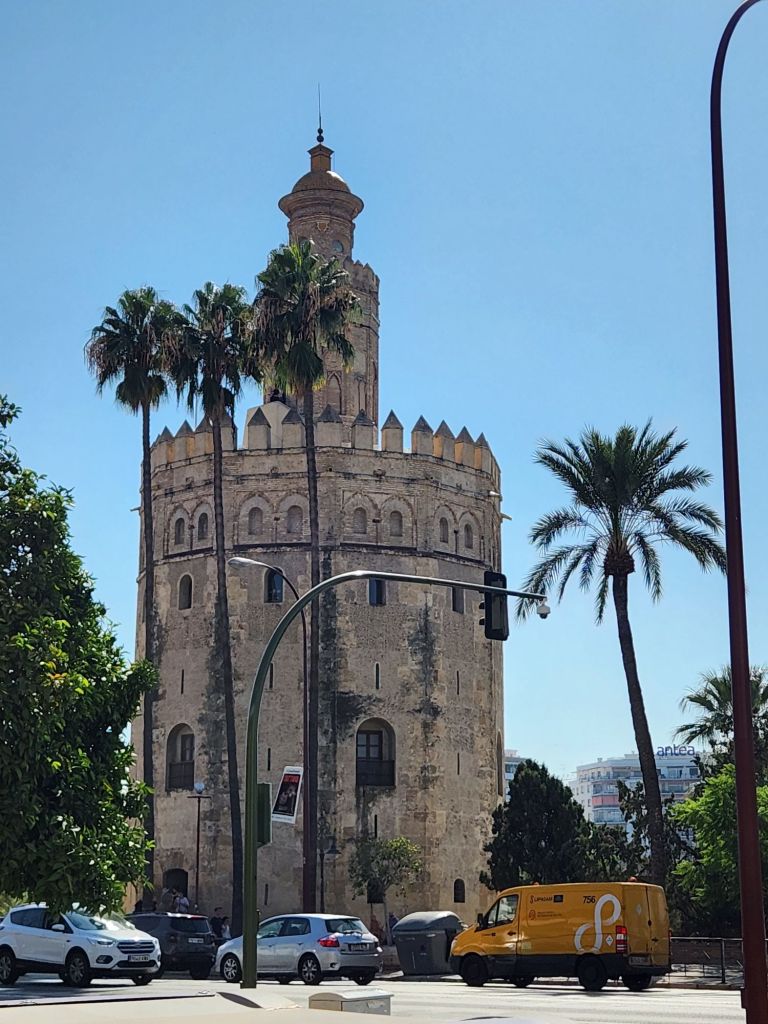
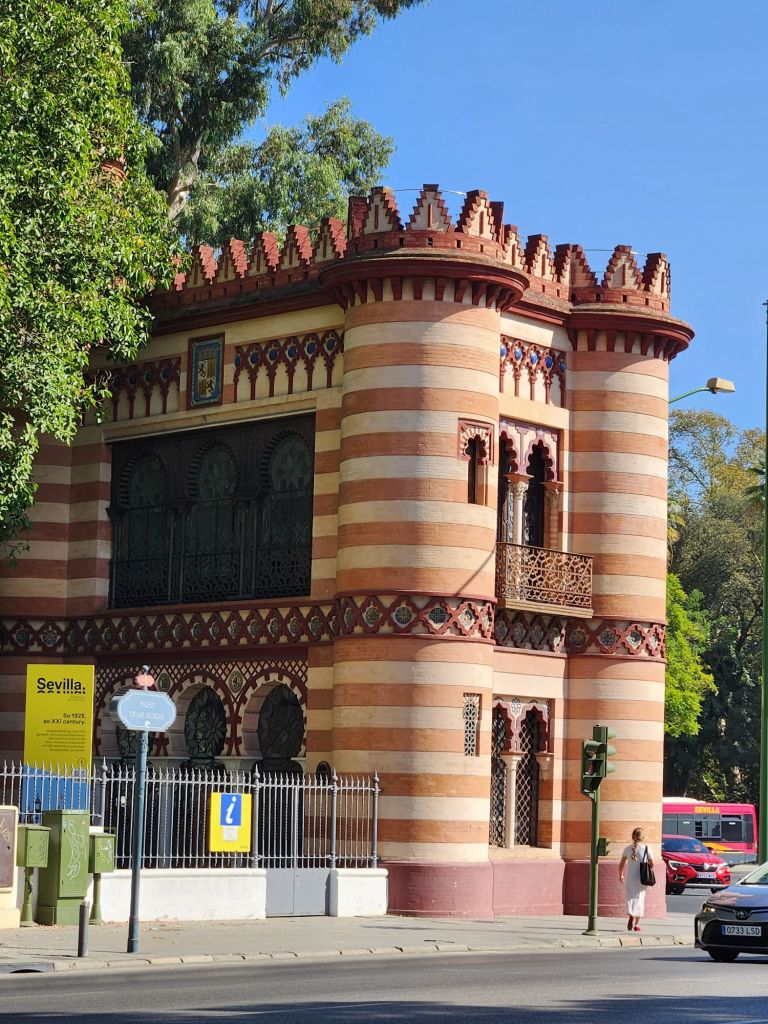
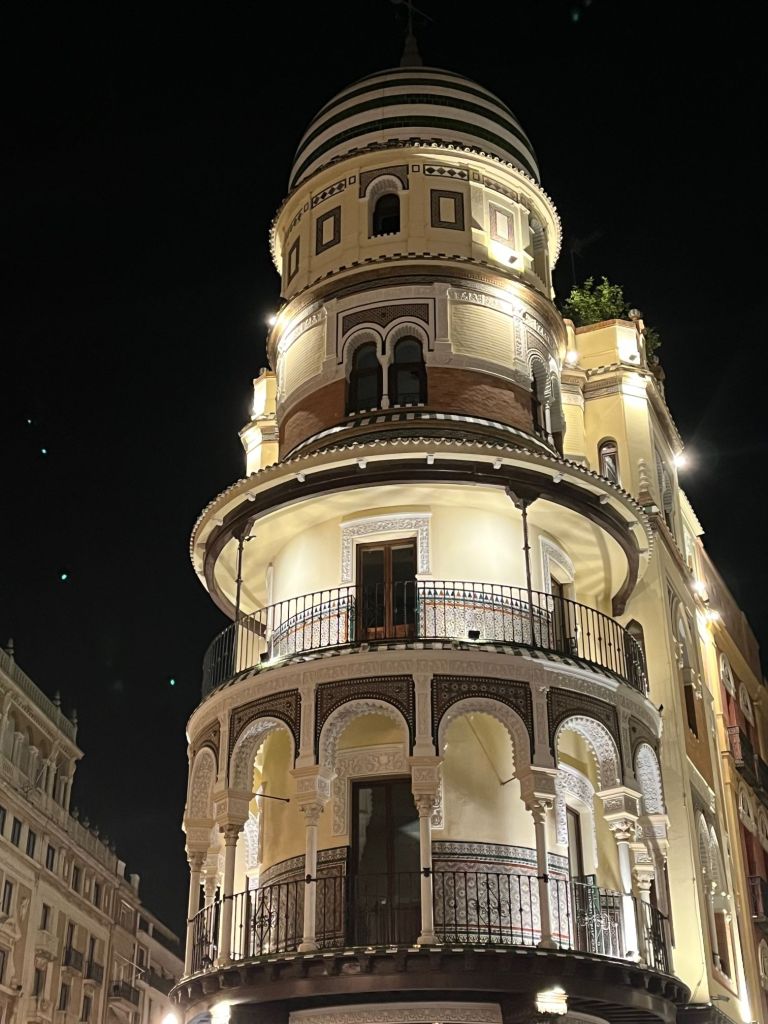
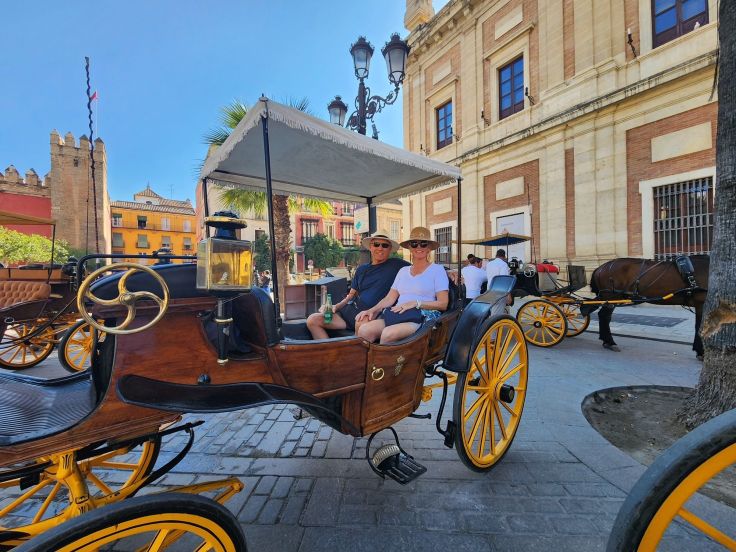
Although it was 91degrees the three days (Oct. 10-13) that we were in Sevilla it didn’t stop us from strolling the narrow streets and plazas exploring the glorious architecture of the city. After meandering through the Santa Cruz neighborhood and Metropol Parasol we took a horse and carriage ride. It was delightful seeing the Real Alcazar, University of Sevilla and the Plaza de España in the shade of the carriage. The Plaza was built in 1928 but appeared to be much older. The tiles, arching bridges, and waterways formed a beautiful scene where pop-up Flamenco dance performances are held. The architecture alone is a good reason to visit Sevilla. The round buildings above were gorgeous.
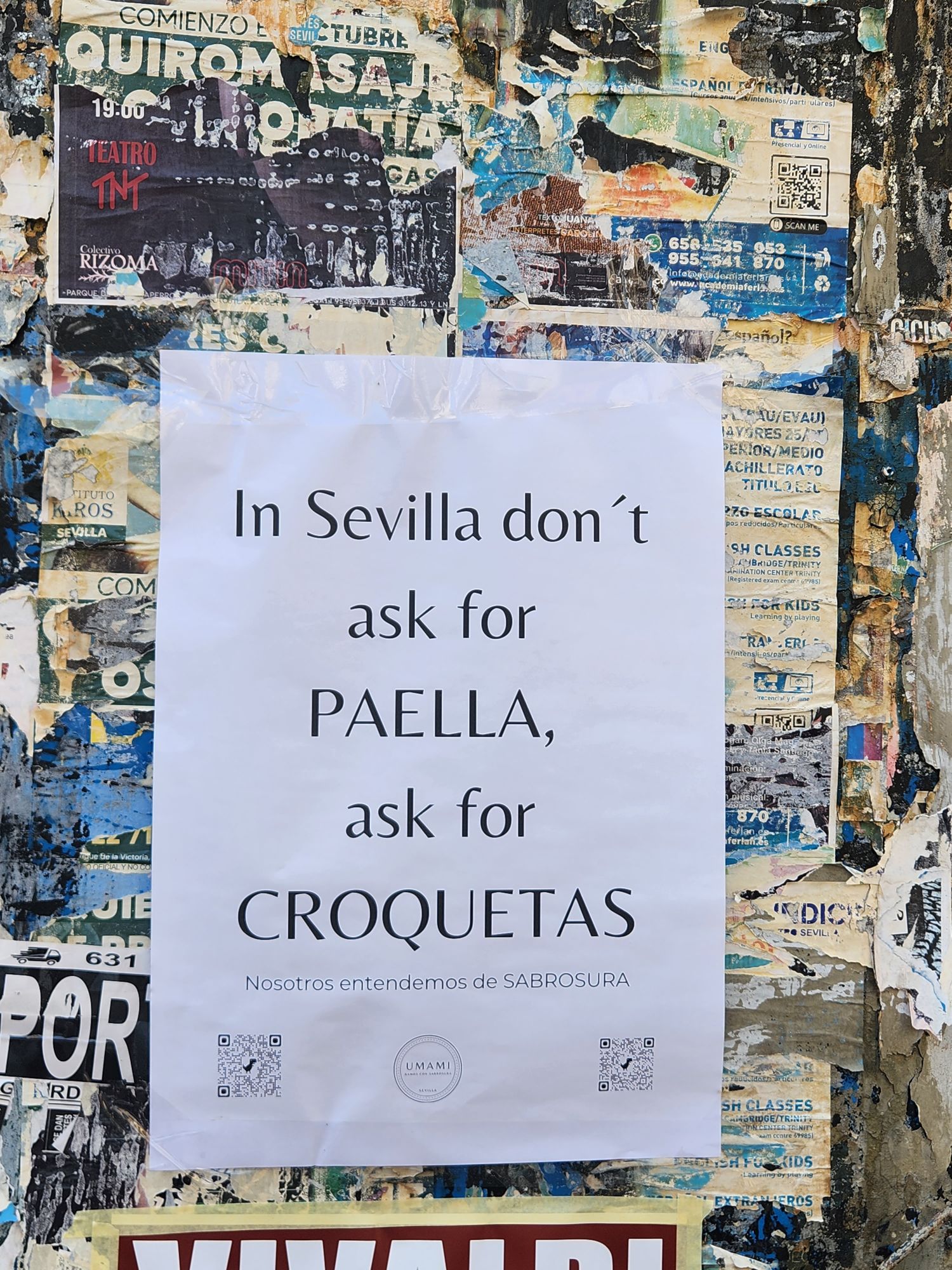
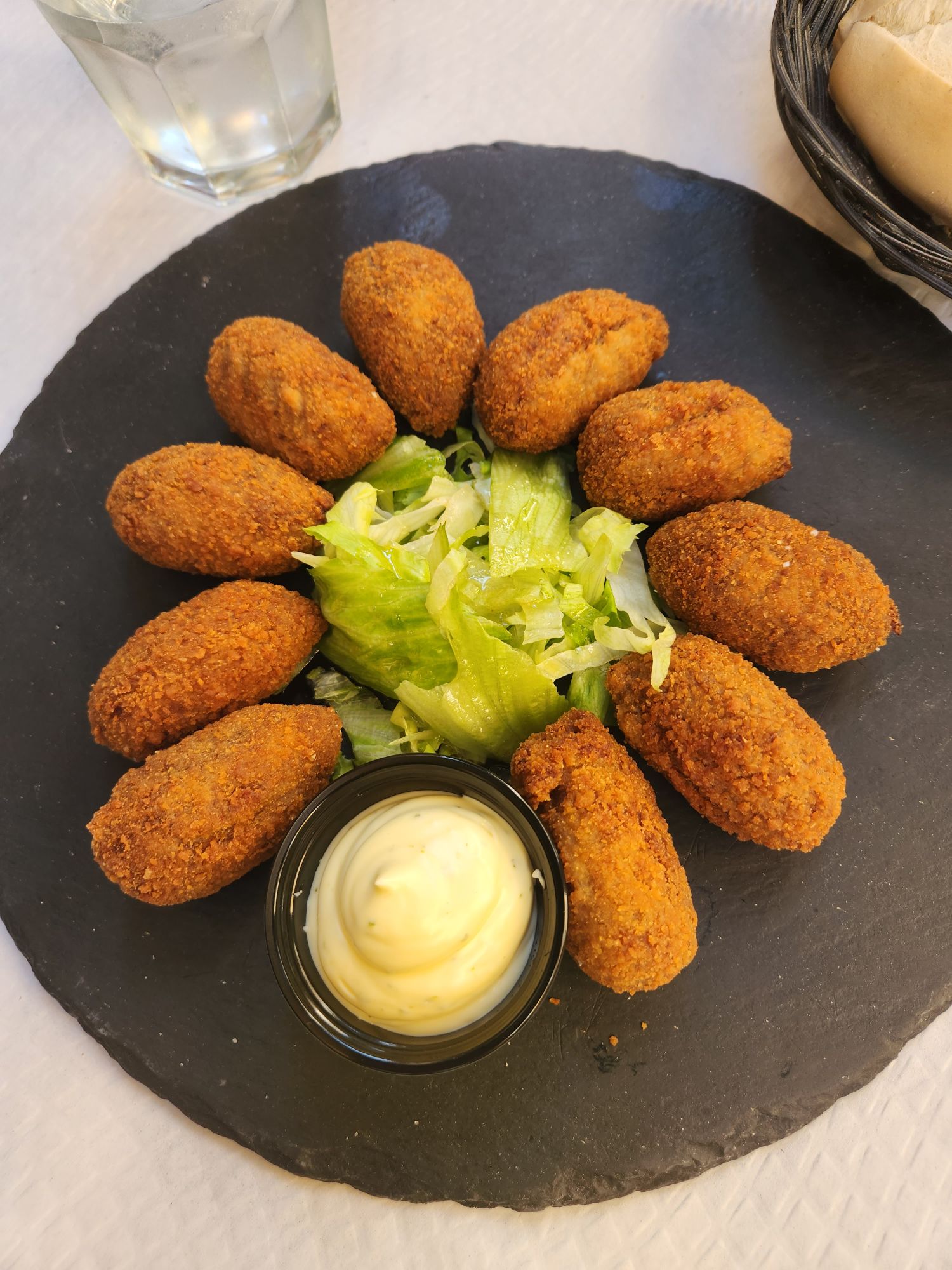
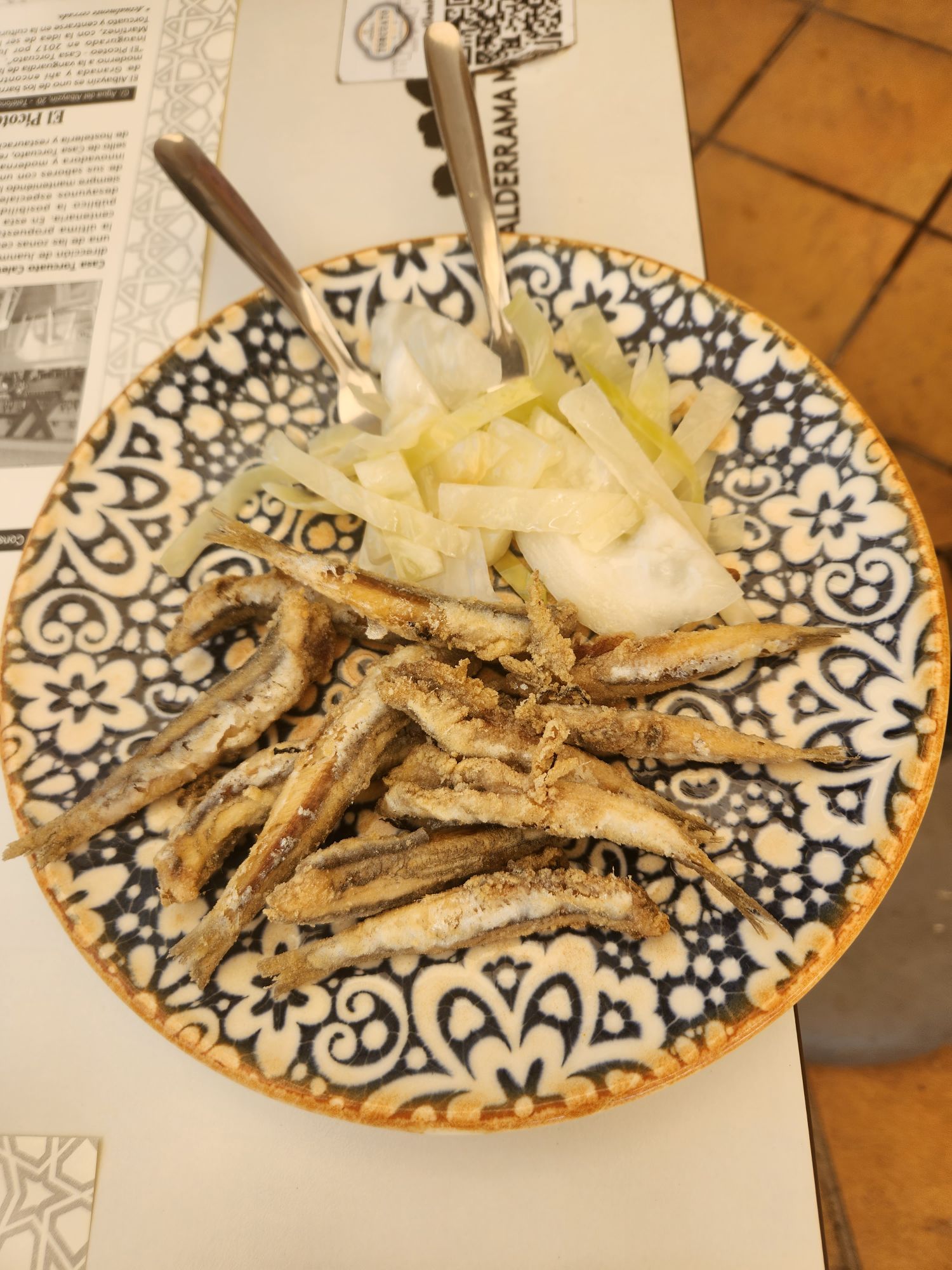
I loved seeing how affectionate the Spanish people were. We constantly saw teenagers holding onto moms, 2 women with arms locked and close families. Of course we observed a lot of kissing on each check while greeting one another. Other Spanish favorites of mine were the patatas bravas (minus the mayo), seafood paella, and the fish (even the fried anchovies). As noted, in Sevilla one must order croquetas rather than paella so we tried the bull tail…not too bad!
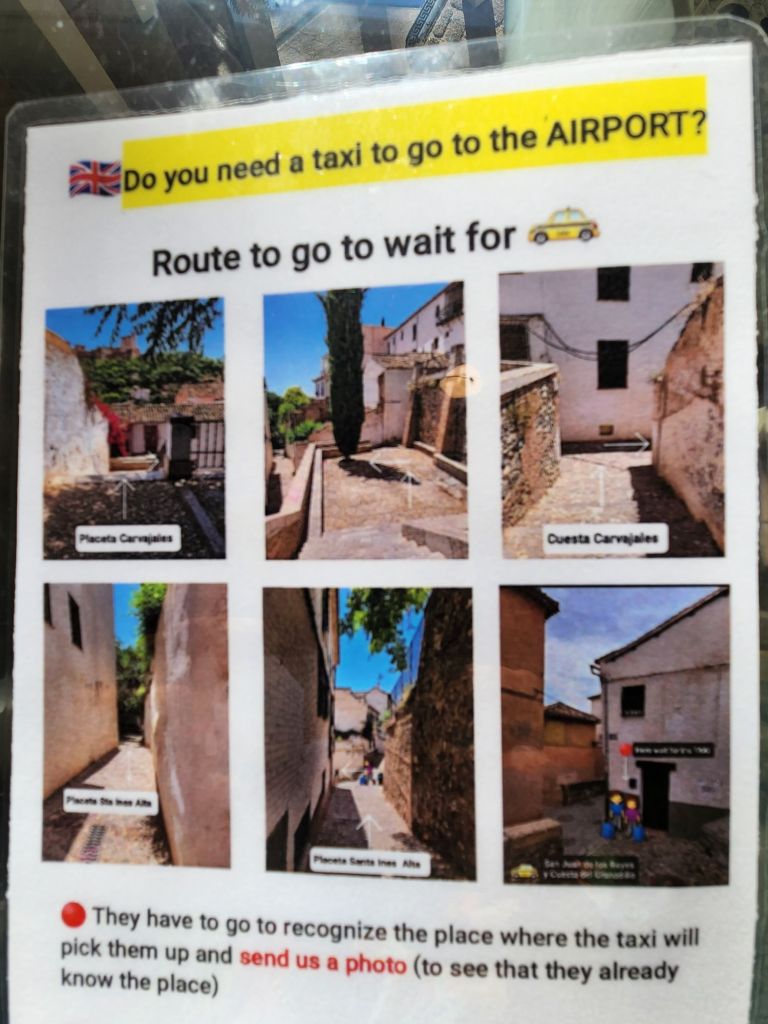
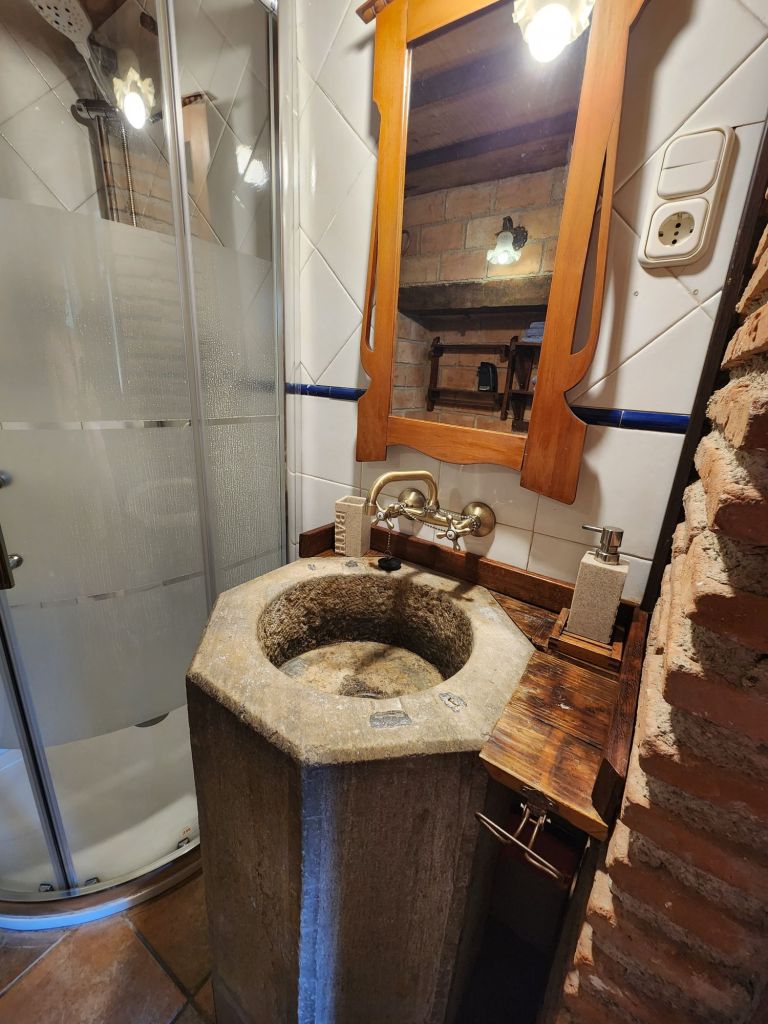
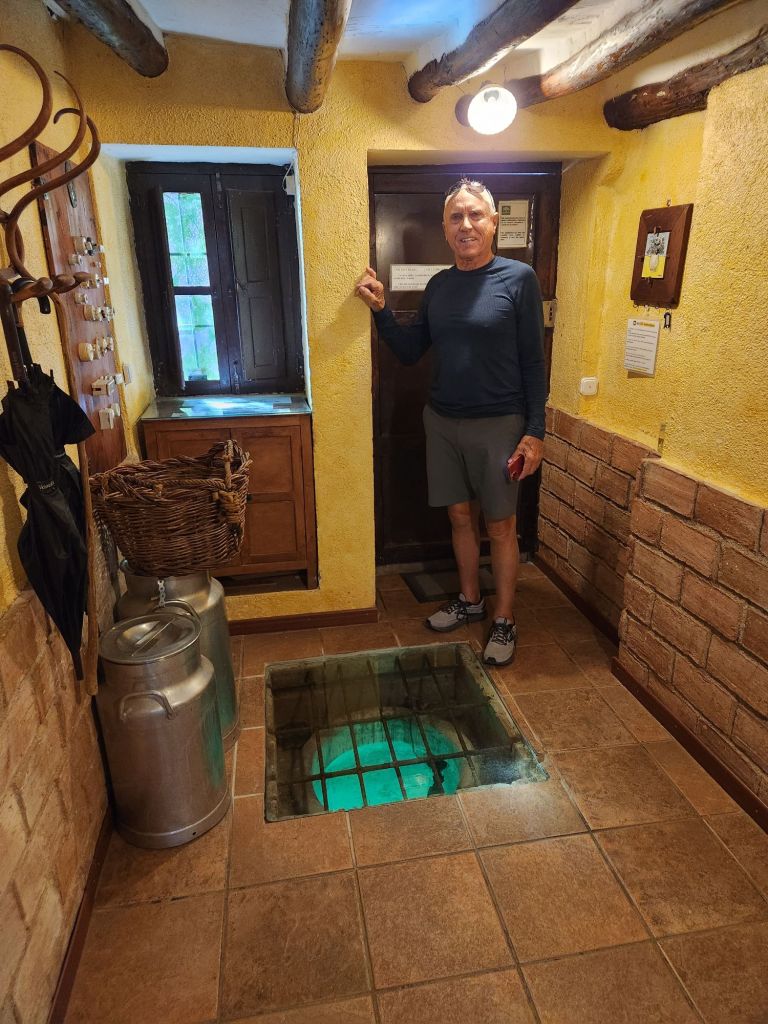
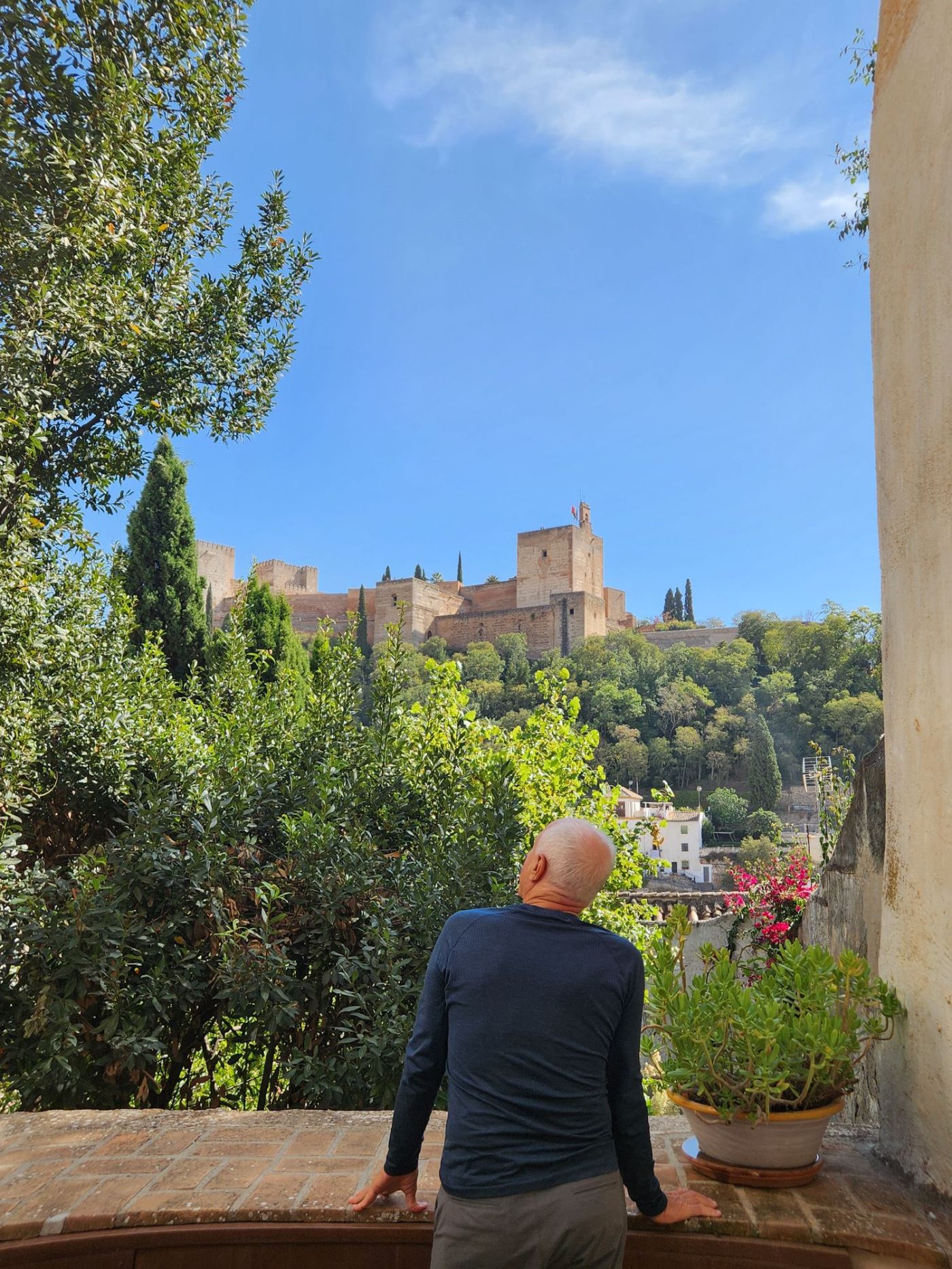
Granada was our home for our last three nights in Spain. Our home was in the Albaicín with dreamy views of the Alhambra from all three levels. The bathroom sink was actually the rim of the cistern that was formerly in the floor of the entrance to the home and had supplied water to the neighborhood in centuries past. A large network of cisterns and pipes dating from as far back as the 11th century are in this area. This UNESCO site had no streets wide enough for a vehicle so when the taxi dropped us off and and picked us up we had to navigate via photos in the AirBnB app to find our way. I was constantly lost and had an oppressive feeling in this neighborhood. The hilly cobblestone streets in this area were unlike any we had seen. The thin oval stones were all placed edge up, sometimes in patterns, but always difficult to walk upon.
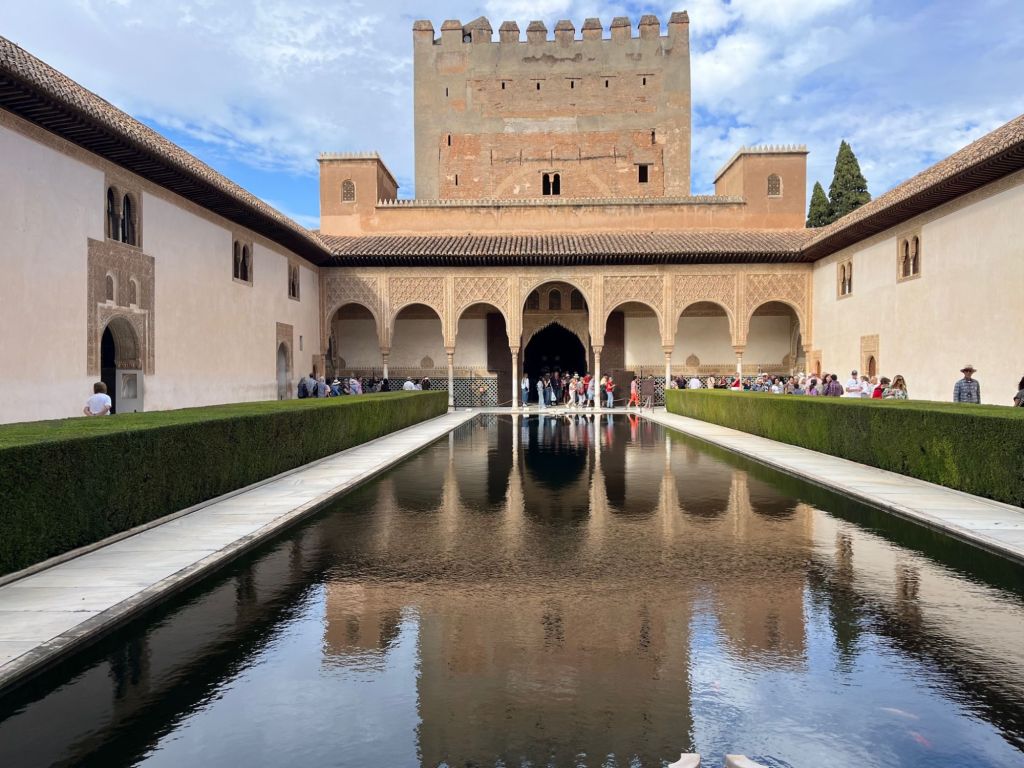
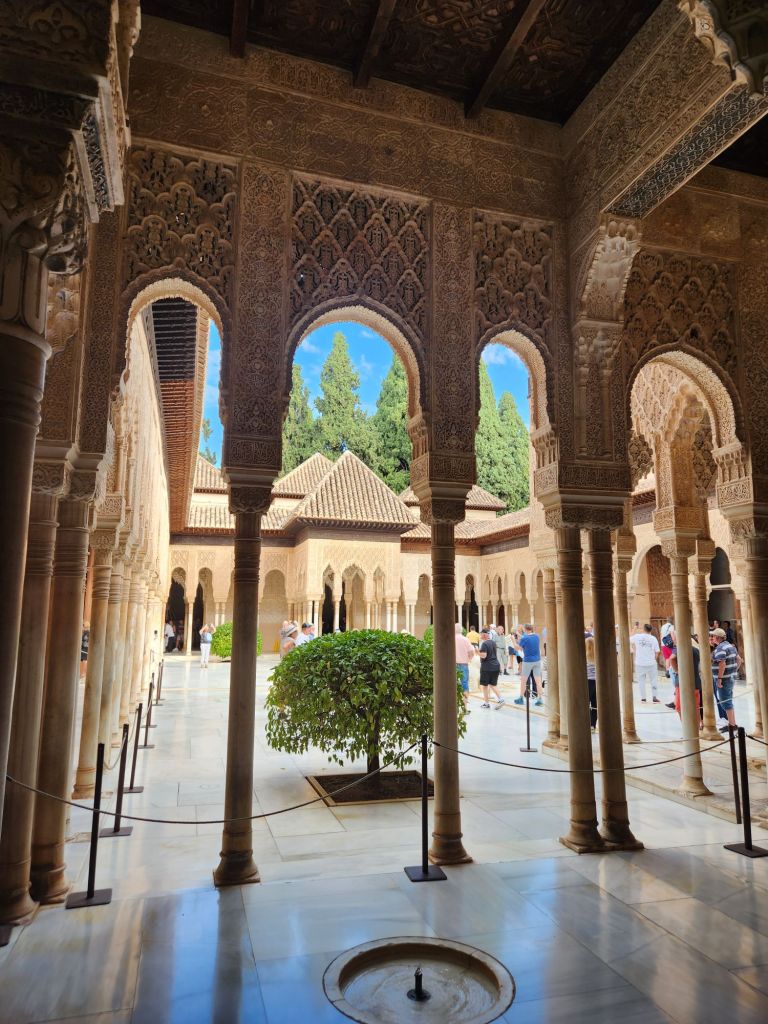
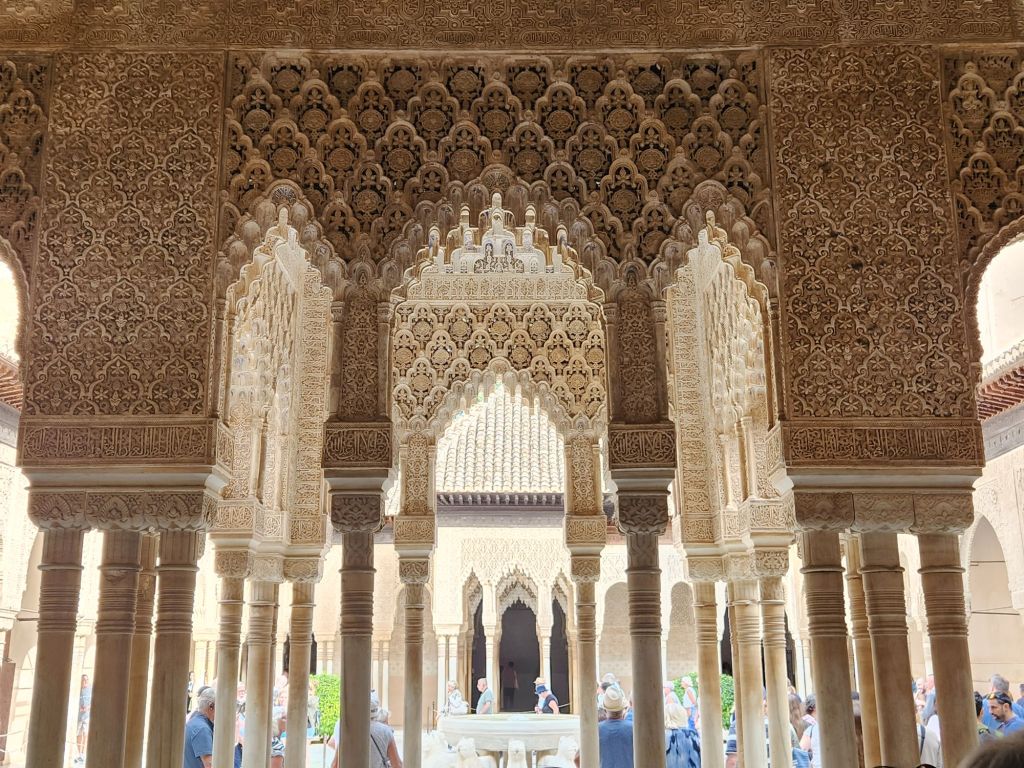
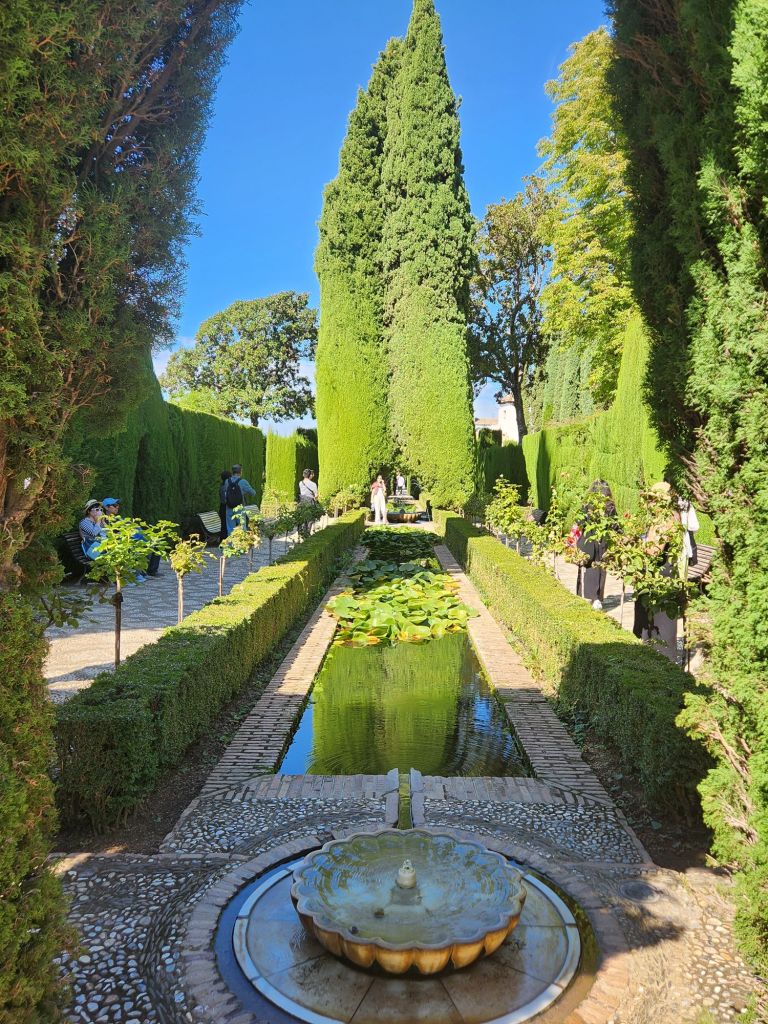
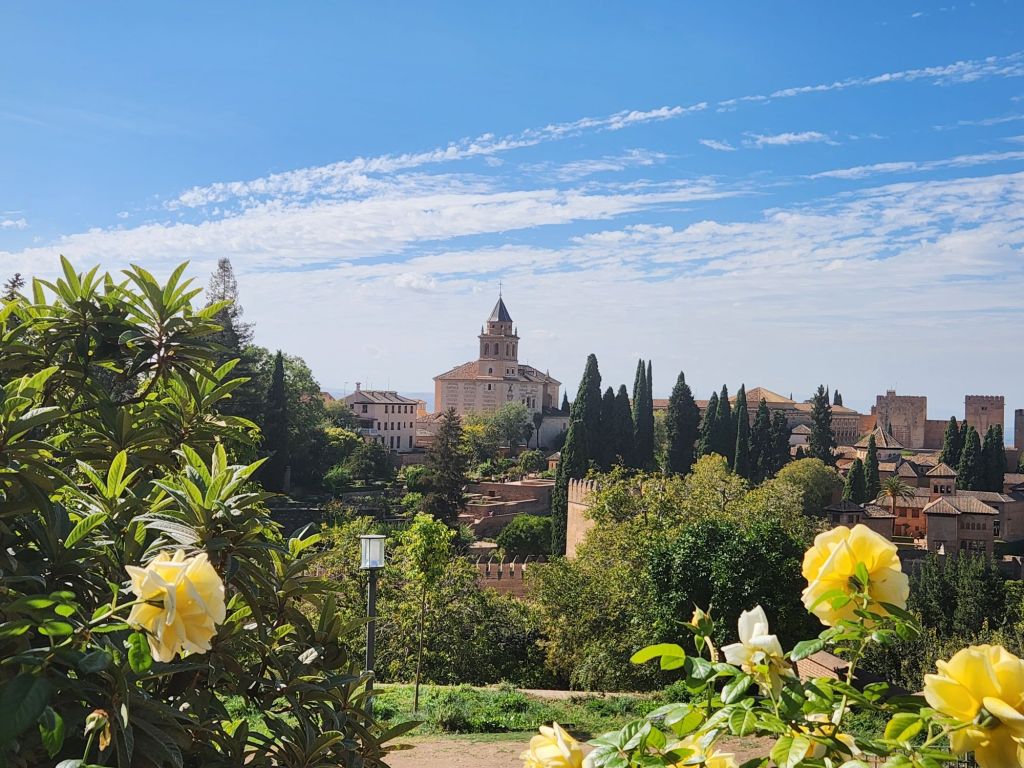
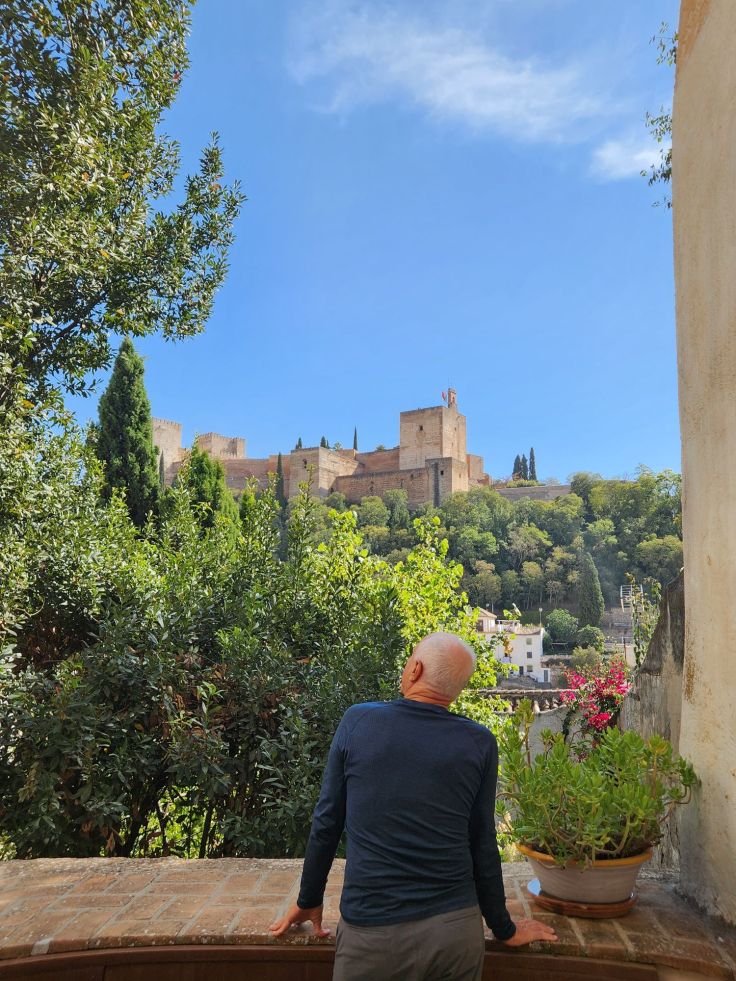
No visit to Granada would be complete without touring the Alhambra. This palace/fortress is one of the most famous and well-preserved monuments of Islamic architecture. The complex was begun in 1238 and after the Moors were kicked out Ferdinand and Isabella moved in and added their Catholic touch. Napoleon 1 and his troops destroyed much of the site. In the early 1800’s many restorations began to take place and eventually became a UNESCO site. I learned a great deal about Islamic art and architecture. The opening image is our superb view of the Alhambra from our lower deck where we relaxed in the evenings.
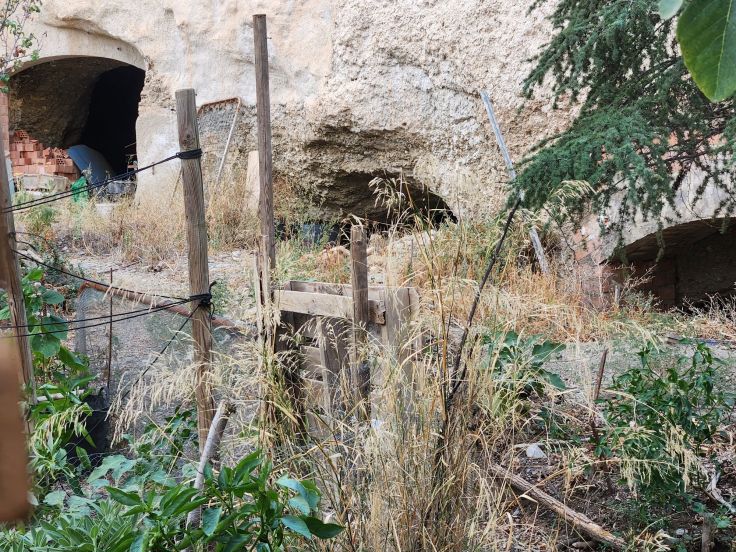
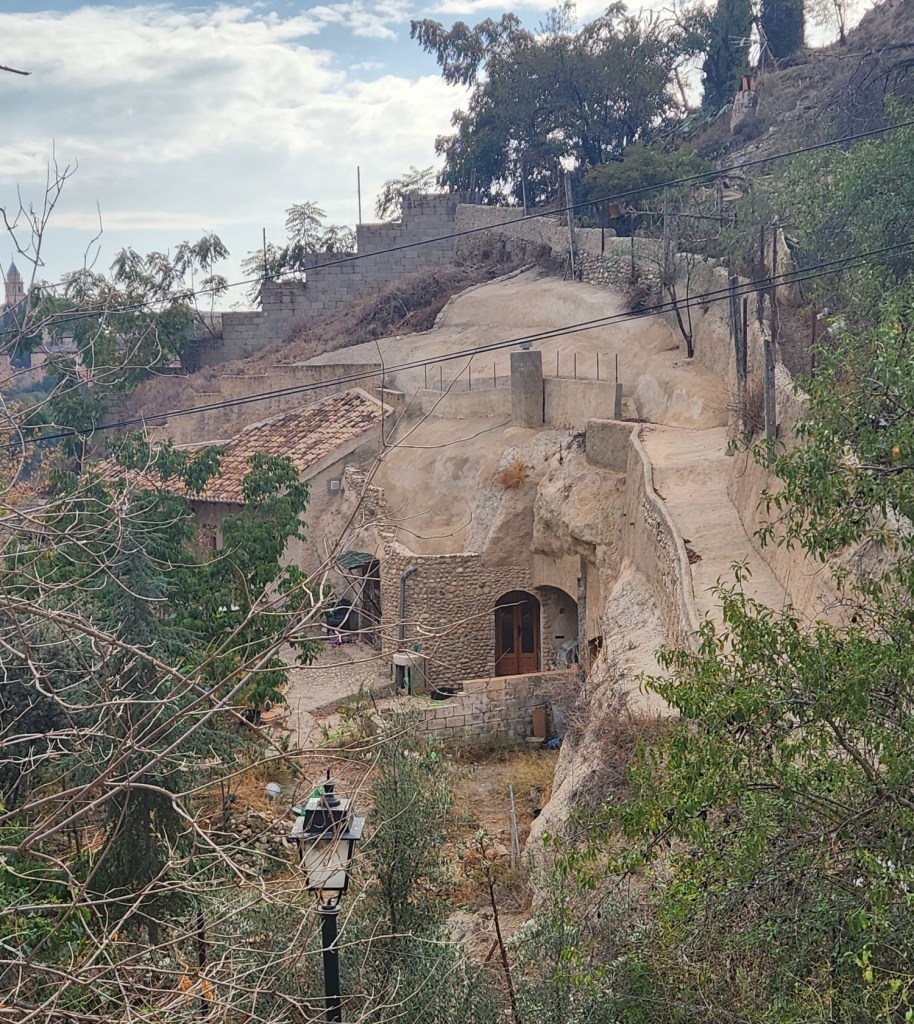
Even more fascinating to me than the Alhambra was the gypsy caves in Sacromonte. People still live in the hundreds of caves carved into stone that dot the hillside. These cave homes were built in the 16th century and were know as the origin of Flamenco. There are many legends associated with the Spanish gypsies, Muslims, Jews, and former black slaves that have sought refuge here. In 1963 after the hill became unstable due to excessive rains the government forcibly evacuated the area There are still many residents and many that cohabitate with their animals. I felt it to be rather spooky and couldn’t wait to leave the neighborhood.
I enjoyed Spain even more than I thought I would. I took spanish from 6th – 11th grade and for a few semesters in college and I thoroughly enjoyed using my long lost skills there. I could happily spend more time in this loving and happy culture and Sevilla was one of our top three favorites of the trip.
 Scott and Melissa's "Unforgettable" Adventures
Leave a comment